
A frozen windscreen: prepare the car for a winter morning
Clear your view without forcing frozen wipers, and prepare a scraper, suitable de-icer and enough time before setting off on a cold morning.
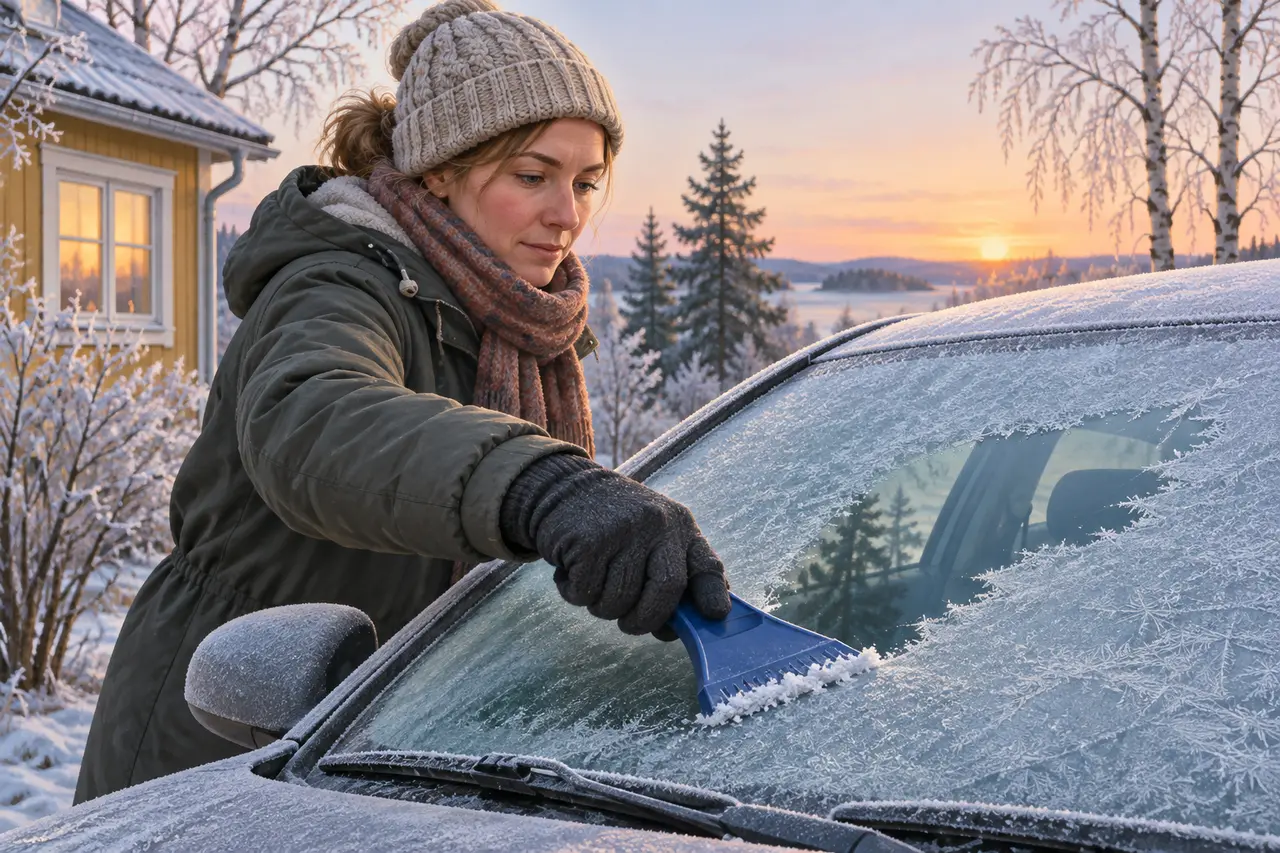
A small clear patch in front of your eyes does not make a car ready to drive. You also need visibility to the sides and rear. Build preparation into the morning schedule before starting the vehicle. This avoids turning departure into a choice between being late and driving with a restricted view.
Prepare the tools the evening before
Keep a plastic scraper, soft brush and a vehicle-compatible de-icer somewhere accessible. Read the product instructions beforehand. Do not substitute a metal object for a scraper or mix household chemicals according to an unverified video.
Consider access to doors and tools when parking. If using a windscreen cover, choose one suitable for the vehicle and remove it carefully. Evening preparation reduces morning tasks; it does not remove the need to check the rest of the view.
Free the wipers first
Make sure the wipers are switched off before starting the vehicle. Release frozen blades rather than using them to scrape ice. Set the car's ventilation and heating functions according to its instructions. Air conditioning, where fitted, can help remove moisture from the cabin.
Do not warm the vehicle in a closed garage. Do not leave it running unattended while returning indoors for coffee. Clear mirrors, side and rear windows and lights. Remove snow that could slide onto the windscreen while driving.
Avoid the water shortcut
The AA advises against hot or warm water: the temperature change may damage glass, and remaining water can freeze again. Hot water carried in a plastic bag is not an automatically safe alternative. Use appropriate products and a scraper according to their instructions.
If the screen already has a chip or crack, avoid experiments and ask a specialist about repair. Pressing harder on a damaged area is not a sensible way to speed up the process.
Check from the driving seat
- The necessary field of view is clear, not merely a narrow strip.
- Wipers are free and the washer contains suitable fluid.
- The windows do not immediately mist over again.
- Mirrors and lights are not obstructed by ice or snow.
Stop safely and address the cause if visibility disappears again. Adjusting the ventilation should not become a struggle to locate an invisible road. Repeated misting deserves a separate investigation: wet mats, ventilation settings and mechanical faults require different responses. Keep that investigation distinct from the immediate requirement to see clearly before moving.
Sources
Prepared 6 November 2026. The image is an AI-generated illustration.