
Leaving an apartment empty in winter: heating, water and checks
Agree on insurance and association requirements, emergency access and practical monitoring before travelling. There is no single safe setting for every apartment.
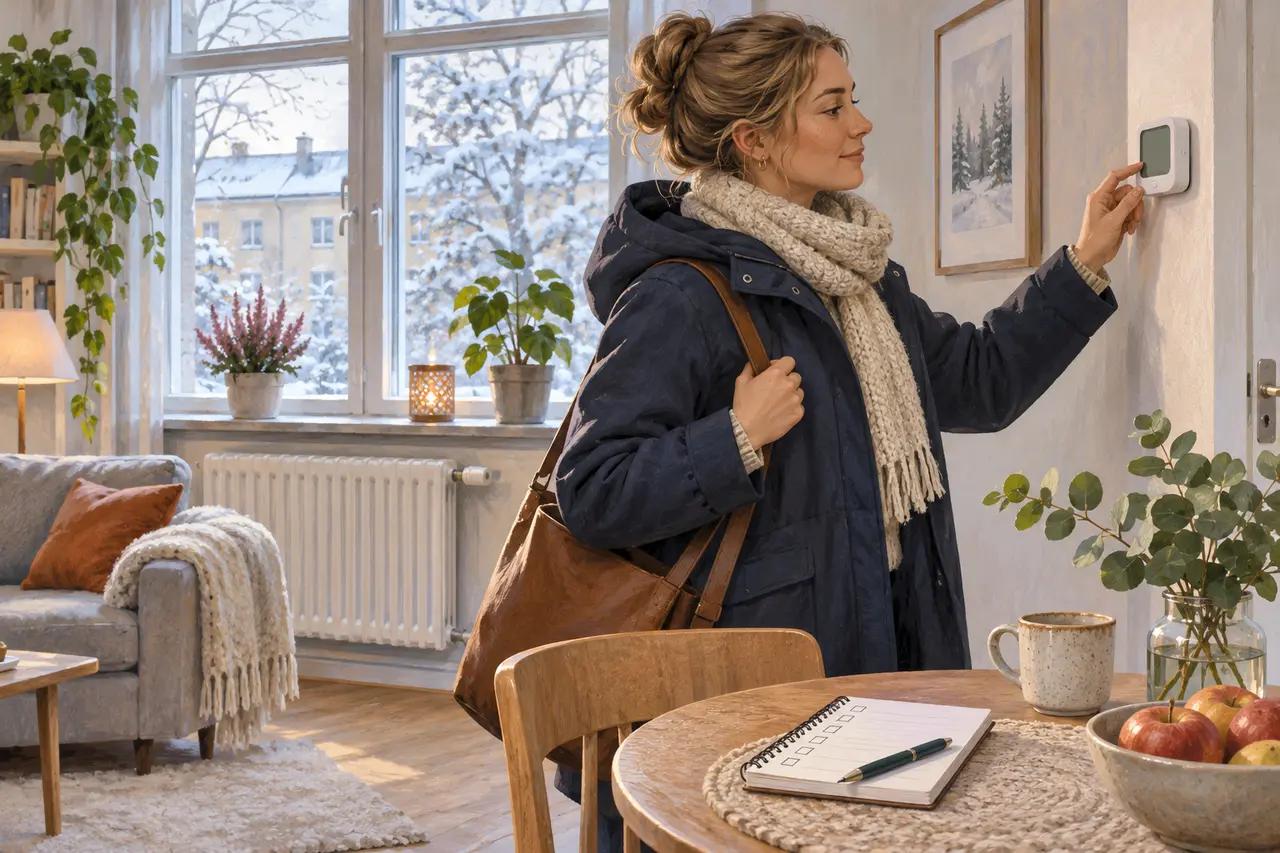
Locking the door and unplugging everything is not a sufficient plan for an extended winter absence. An apartment is connected to shared building systems, neighbours and insurance conditions. Begin with a list of systems that need to operate, rather than trying to minimise every item of consumption.
Clarify requirements before leaving
Read your insurance contract and apartment association's rules. Check conditions concerning a long absence, heating, supervision and damage prevention. Policies differ. A general article cannot prescribe one safe temperature or guarantee an insurance payout.
Ask the insurer for written clarification if “regular inspection” is not defined. Establish with the association whom to contact about a shared-system fault and how emergency access to your apartment will work.
Do not switch off heating blindly
Consider heating, plumbing, ventilation and equipment requiring power together. Avoid changing settings without understanding effects on pipes, moisture and neighbouring spaces. Reduced heating must suit the installation, contract and building requirements. A portable heater should not become an improvised substitute for a reliable permanent arrangement.
Check for leaks, unusual sounds, defective valves and obstructed ventilation before departure. Resolve an existing problem rather than leaving a friend instructions to keep placing a bowl beneath it.
Understand the water arrangement
Locate the apartment's shut-off valve and establish whether closing it affects necessary systems. Do not interfere with a communal riser or drain a shared heating system yourself. Follow equipment instructions and use a competent specialist where a particular winter shutdown procedure is needed.
Photograph meter readings and accessible valve positions. Keep connections visible if the person checking needs to spot leaks. During an incident, safely limiting damage and notifying the responsible people come before detailed photography.
Give someone a defined job
- How to enter without exposing keys to strangers.
- What to inspect: water, temperature, windows and visible leaks.
- Who to call about a problem.
- How to confirm a completed visit.
- Which actions must not be attempted independently.
A remote sensor is useful only alongside someone who can respond. Check power, connectivity and alerts before leaving. Do not publicly share your precise absence dates or spare-key location. A workable plan identifies both what is monitored and who can actually take action when something changes.
Sources
Prepared 6 November 2026. The image is an AI-generated illustration.