
Smoke and carbon monoxide alarms: differences and checks
Check what each alarm detects, its power supply, service life and installation before Estonia's November home visits. One alarm does not normally replace the other.
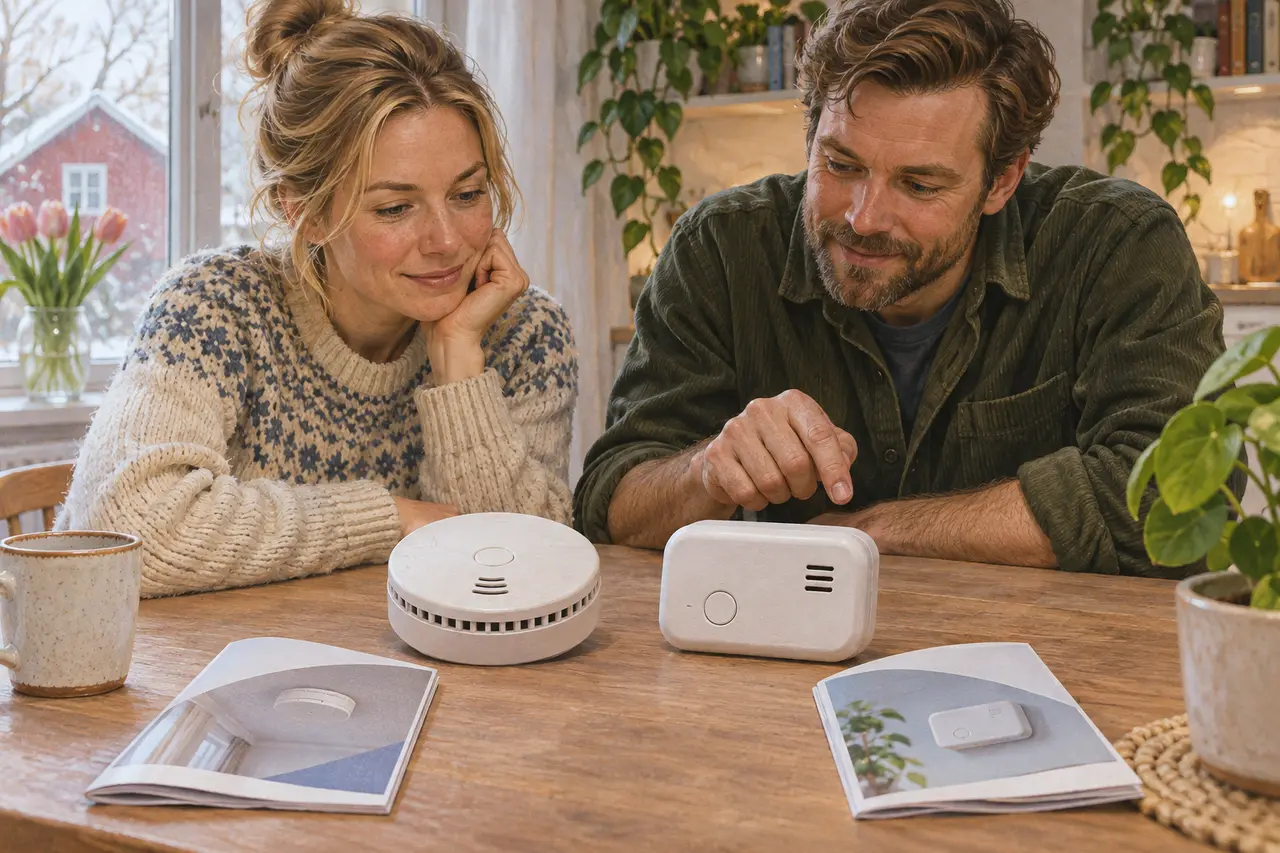
A small device on the ceiling can become part of the background. Its presence alone does not establish that it works, is correctly installed or detects the relevant danger. Estonia's Rescue Board announced home checks for 9–13 November 2026, focusing on smoke and carbon monoxide alarms. That is a reason to review your own equipment calmly beforehand.
The devices have different purposes
A smoke alarm detects signs of fire; a carbon monoxide alarm detects CO. One does not replace the other unless a properly identified combined device provides both functions. Do not identify its purpose by shape alone: find the model name and instructions.
The Rescue Board says every home must have at least one functioning smoke alarm. A suitable functioning CO alarm is also required where there is a solid-fuel appliance or a gas appliance connected to a chimney. Check the precise requirements and recommendations for your arrangement.
Review the installation
A smoke alarm is fitted to the ceiling according to its manufacturer's instructions; kitchen and bathroom steam can cause false alarms. Do not automatically apply smoke-alarm placement rules to a CO device. The CO alarm's distances and position depend on its instructions and the room.
Avoid buying a device without an understandable manual. In a rented home, establish who maintains it and who must be told about a fault. That agreement should support an actual equipment check rather than replace one.
Follow the checking procedure
- Find the model and its end-of-life marking.
- Check the power supply and low-battery indications.
- Use the test button as directed by the manufacturer.
- Remove dust using a permitted method.
- Record the check and the next action needed.
Do not test a smoke alarm with an open flame. Never cover its openings or leave it disconnected because a sound is annoying. Investigate whether the cause is a false alarm, dirt, a battery problem or the end of the device's service life.
Respond to an alarm
Do not assume a fault merely because you cannot see smoke or smell anything. Move to safety and call 112 if there is danger requiring emergency help. Returning to investigate a source should not put people at risk.
A working alarm supplements safe heating and ventilation. It does not make a defective stove safe to use or replace maintenance that requires a qualified person. Keep the manual available so that future checks do not depend on remembering what an unfamiliar beep meant.
Sources
Prepared 6 November 2026. The image is an AI-generated illustration.