
Prepare your home for the first frost: windows, heating and water
An autumn inspection plan for an apartment, house or cottage: draughts, heating, alarms, pipes and time away.
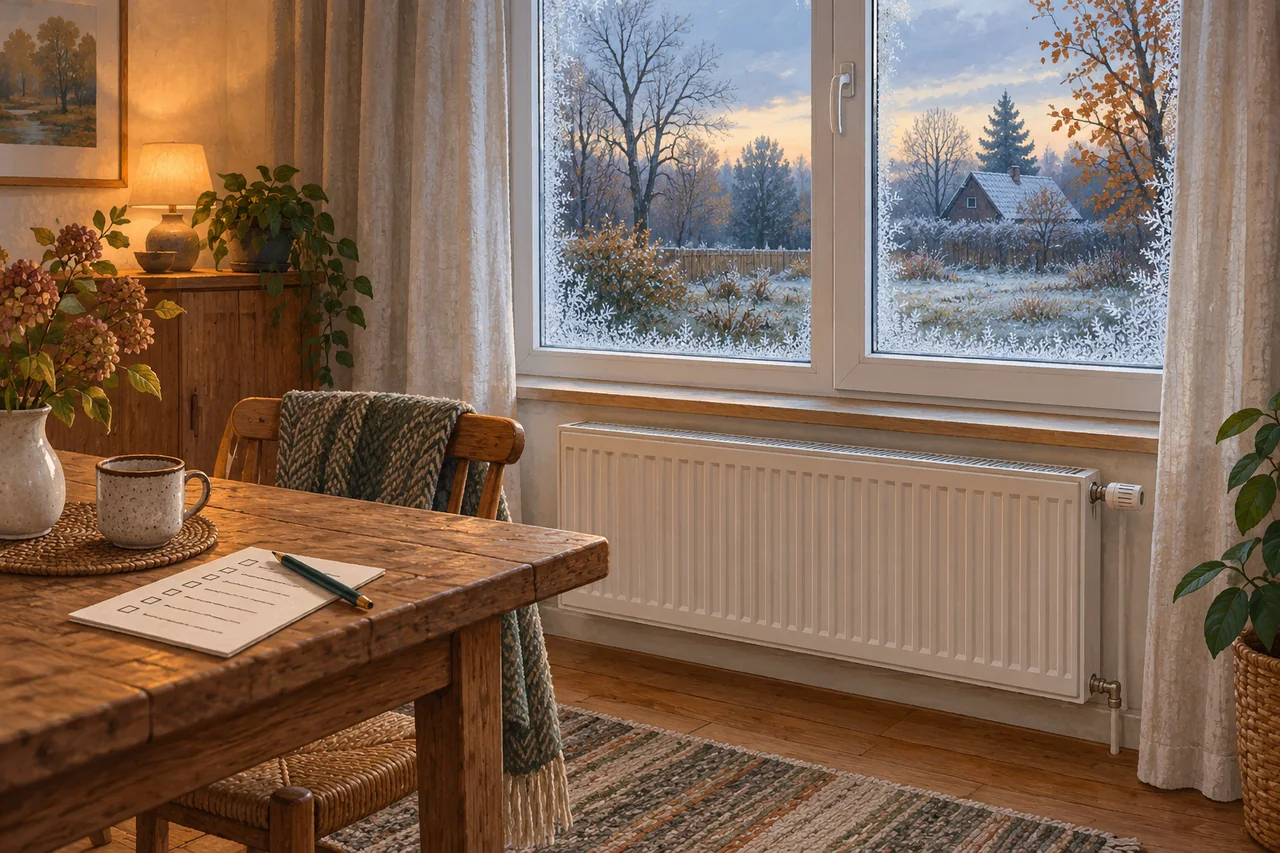
Checked on 23 October 2026. Preparing an Estonian home for the first frost is easier if you start with a short inspection of windows, heating, water supplies and rooms that cool down quickly. The aim is to spot a problem before a freezing night and decide which work deserves attention first. Use the plan below for an apartment, house or summer cottage, and check the weather forecast for your own location separately.
Make a list of vulnerable places
Walk through the property with a notebook. Record draughts, recurring moisture, unusual heating noises and pipes running through cold spaces. Give each item an owner and a next action: inspect it, contact a technician, ask the apartment association or obtain the correct maintenance material. This makes shopping respond to an identified problem rather than an advertisement for insulation products.
In an apartment, begin with checks that do not interfere with shared systems. Tell the association about a leaking riser, an unheated common area or a damaged basement window. Tenants should agree repairs with their landlord. In a detached house, pay particular attention to the utility room, garage and incoming water supply. For a cottage, decide whether the building will remain heated or be prepared for a long period without occupants.
Windows: identify the source of the draught
Check that opening sections close properly, seals are intact and frames show no visible damage. Follow the manufacturer’s instructions for cleaning and maintenance. If a window sits unevenly, the handle requires force or a seal has deteriorated, ask a specialist about adjustment or replacement. Tightening unfamiliar fittings at random can create another fault instead of resolving the original one.
Also inspect accessible joints around doors, a balcony entrance and the attic hatch. Photographs help you explain the problem to a landlord or technician. Choose temporary materials for the actual surface and intended use. Do not cover ventilation openings or alter the supply of fresh air simply to make the home feel completely sealed.
When condensation appears, record the circumstances: cooking, drying laundry or waking up in a bedroom. One observation does not establish the cause. Discuss recurring moisture or mould marks with the building manager or a ventilation specialist. Wiping a window is useful housekeeping, but it does not replace investigating a problem that returns every day.
Heating: arrange maintenance before heavy use
Find your heating instructions and check the service history. For a stove or fireplace, arrange inspection and cleaning by a competent chimney sweep and have defects assessed by an appropriate specialist. The Rescue Board highlights dry fuel and safe ash handling, including a suitable metal container with a lid, kept away from combustible materials.
The work required for a heat pump or boiler depends on the model. An owner can locate the manual, check service records and provide clear access for a technician. Electrical connections, gas equipment and internal components should be handled by people qualified for the task. If a device displays a fault, record the code and circumstances instead of repeatedly restarting it without understanding the cause.
Keep radiators accessible so that you can observe their condition. Report leaks, irregular operation and unusual noises to the organisation responsible for maintenance. In an apartment building, first establish which actions residents are allowed to take themselves. A similar symptom can have different causes in different systems, making a blanket instruction to turn every valve unhelpful.
Fire precautions and alarms
Check that your smoke alarm works and that a carbon monoxide alarm is available where combustion equipment is used. Follow the instructions for the specific model when choosing a location, testing it and changing its battery. Rescue Board advice stresses regular alarm checks and keeping combustible belongings clear of hot surfaces. A heater should never become a clothes drying rack.
If you expect to use a portable electric heater, check its manual, cable condition and suitable electrical connection in advance. Avoid chains of adapters serving several powerful appliances. Stop using a damaged socket, overheating connection or appliance producing a burning smell, and contact an electrician. Owning a spare heater does not establish that a particular circuit or position is suitable for it.
Show everyone at home the exit, torch and emergency contacts. Discuss how to respond to an alarm while the household is calm. If there is smoke, fire or suspected dangerous carbon monoxide, move to safety and call 112. Looking for a manual or attempting to diagnose equipment must not delay leaving a dangerous room.
Pipes and outdoor water supplies
Inspect accessible water pipes in basements, garages, outbuildings and along external walls. Establish where the water runs and how those spaces are kept warm enough. Ask a plumber to assess damaged insulation or exposed sections. The Rescue Board recommends protecting pipes against freezing and expressly warns against thawing frozen pipes with an open flame.
Write down the location of the main shut-off valve and make sure you can reach it. Prepare outdoor taps, hoses and seasonal irrigation according to their actual design and instructions; draining a visible section is not a complete solution for every installation. If the arrangement is unfamiliar, ask the installer before a concealed section becomes damaged.
If freezing is suspected, do not search for a pipe with a burner or apply intense heat to an unknown section. Arrange a safe professional inspection. If water starts leaking, shut it off if you can do so safely and inform the owner or building manager. Stay clear of water that could be in contact with damaged electrical equipment until the electrical hazard is addressed.
When the property will be empty
Make a separate written plan for a cottage or a longer trip. Include the heating setting, treatment of the water system, monitoring arrangements and the contact who holds a key. Decisions about switching off or draining water must account for the boiler, water heater and any equipment that depends on a supply. An instruction to turn everything off can be wrong for a particular property.
A trusted person should know what would indicate trouble, such as an unexpectedly low temperature, a device alert or signs of a leak. Remote monitoring helps only when somebody can respond. Check who will receive an alert, who can visit and how they will gain access. Read the insurance conditions for an unoccupied home so any required steps are understood before departure.
Prepare for a temporary interruption
Keep a torch, charged power bank and essential contact numbers accessible. Think through opening the door, contacting a relative and receiving information during a power cut. If a child or someone needing ongoing assistance lives at home, identify a suitable warm place for a temporary stay. The plan should reflect the household’s actual needs and capabilities.
After the first cold spell, repeat the inspection and compare your notes. Has the draught stopped? Is there new moisture? Is the heating behaving normally, and are pipe areas dry? Mark completed jobs and assign unresolved ones to a specific person. A follow-up inspection lets you judge the results and prepare for the next cold night with a clear course of action.