
Caring for a wool blanket: read the label before washing
Choose a cleaning method for your wool blanket, prepare it carefully and plan drying before washing. A practical guide when care instructions are missing.
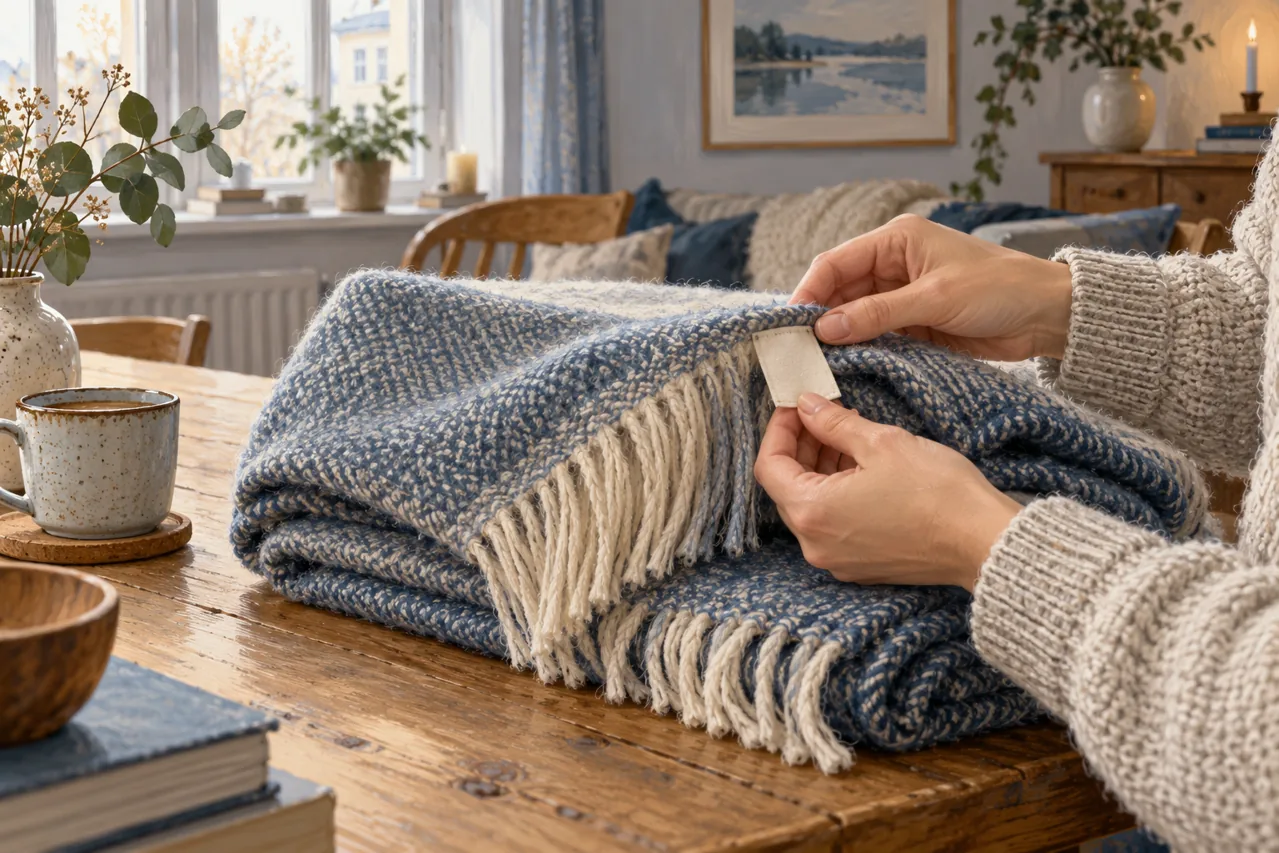
A blanket that spent summer in a cupboard may return to the sofa every evening in November. Before washing it, establish what care this particular item allows. “Wool” in the fibre list is not a complete washing instruction: construction, finishes and the maker’s guidance also matter. The useful outcome is a clean blanket that keeps its shape and can go straight back into service.
Keep a readable record of the label
Spread the blanket in good light and photograph the fibre label and care instructions separately. Record the maker and model if available. Compare an unclear symbol with GINETEX’s official guide. The number inside the wash tub is the maximum washing temperature, bars underneath indicate gentler treatment, and a crossed-out tub means do not wash. These symbols answer different questions.
Do not borrow the routine for another blanket simply because both feel woolly. A family heirloom and a recent purchase may have different construction. A saved photograph also helps when the sewn-in label eventually becomes unreadable.
Decide what actually needs cleaning
Inspect both sides, edges, fringes and previous repairs. A small isolated mark does not automatically call for treating the entire item. Check whether the manufacturer allows spot cleaning. Avoid starting with a strong stain remover on the most visible area; even an approved product should be tried discreetly as directed.
For a blanket that has merely been stored, begin with inspection and any airing the maker permits. Adding fragrance does not establish the cause of an unfamiliar smell. Describe signs of damp or extensive soiling to a cleaning professional rather than moving through progressively hotter wash settings.
Plan drying before the wash begins
Check the blanket instructions alongside the washing machine manual. The load limit for a particular programme may differ from the drum’s headline capacity. Select a product suitable for the material and note the settings before starting, especially if another household member will operate the machine.
Have the drying space ready before the blanket gets wet. If the label requires flat drying, arrange a suitable surface first. A hot radiator or tumble dryer is not a substitute for that instruction. Support the wet blanket during transfer so its full weight does not hang from one corner.
When the label has disappeared
Search by the exact product name. A similar shop photograph does not establish identical fibres or finishes. Send the manufacturer or cleaner pictures of the blanket and any surviving markings. Postpone whole-item wet cleaning until the appropriate method is clear.
After cleaning, allow the blanket to dry fully before folding it loosely. Keep the label photograph with the model name. Next autumn, the decision can start with a reliable instruction instead of a vague memory of last year’s machine programme.
Sources
Prepared 1 November 2026. The image is an AI-generated illustration.
Read next
Drying laundry indoors in autumn without a permanently damp room