
Shopping in the boot: prepare before a large grocery run
Check your car’s load anchors, organise shopping and plan unloading. Understand why a grocery-bag hook may not secure a heavy item.
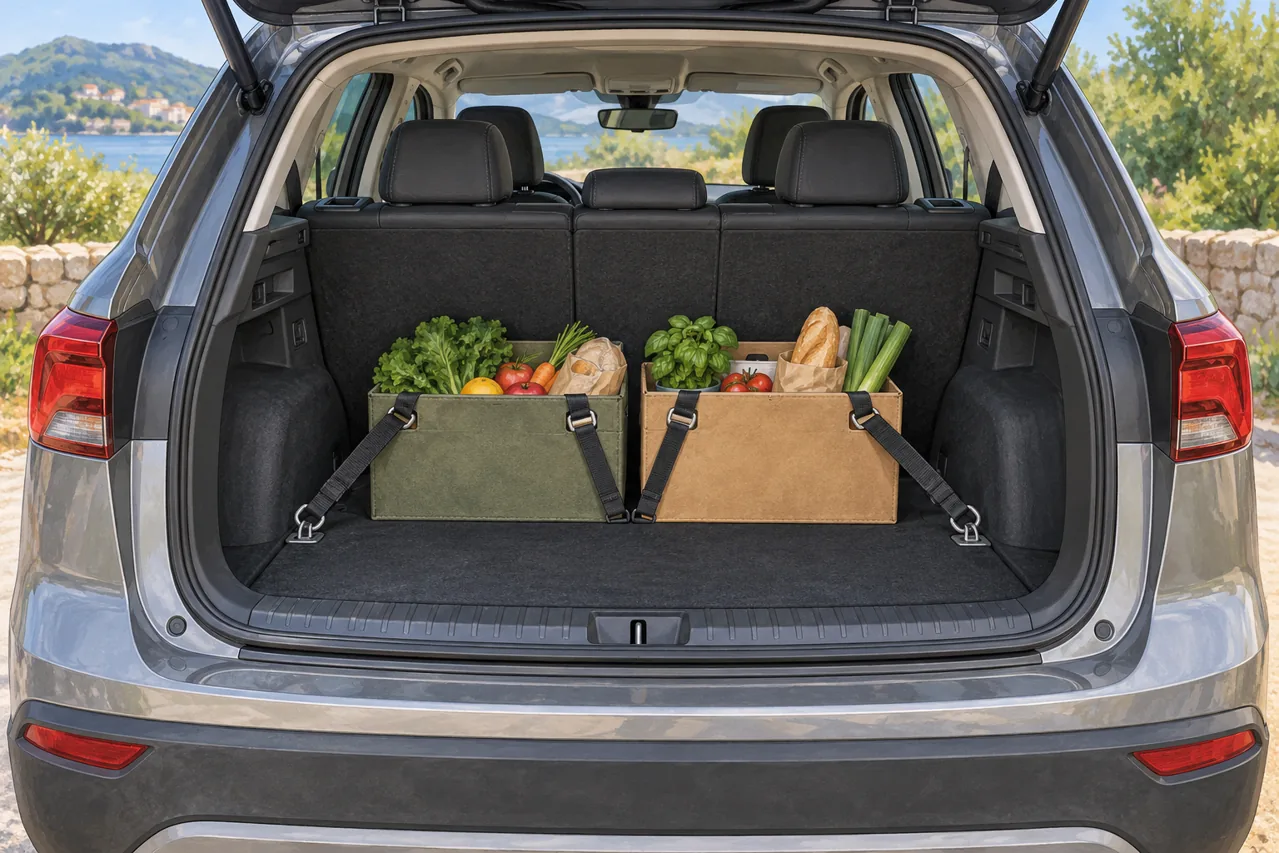
A large shopping trip usually starts with a grocery list rather than a loading plan. By November, the boot may also contain wet umbrellas, spare shoes and everyday equipment. Preparing the space before leaving avoids placing a heavy purchase wherever a gap happens to remain after everything else is loaded.
Identify the car’s actual anchor points
Open the handbook for your exact model and model year. Find the sections on loading, permitted weight and load restraints. Establish which eyelets are intended for straps and which hooks are only for hanging bags. Similar-looking fittings do not necessarily have the same purpose.
For example, one Volvo V60 handbook distinguishes grocery-bag hooks from anchor points used for heavier items. That is a model-specific example, not a description of every vehicle. Follow your own handbook and do not assign an assumed carrying capacity to an unfamiliar fitting.
Plan packaging alongside the shopping list
Separate heavier purchases from lighter ones. This lets you position heavy items according to the vehicle’s loading guidance and keep fragile packs separate. Boxes can organise shopping, but putting items in a box does not mean the load is restrained.
Do not treat the handle of a thin carrier bag as a cargo strap. Use suitable restraints and designated attachment points. If a purchase cannot be positioned and secured properly, arrange another transport method or split the shopping into separate trips. A tailgate that closes is not, by itself, evidence of a suitable load.
Keep necessary equipment accessible
Before packing, think about what might be needed at a stop or during the journey. Avoid burying essential vehicle equipment beneath everything else. The passenger compartment should not contain loose items that could reach the pedal area or distract the driver.
If seats are folded, check the handbook’s guidance for that configuration. Moving a seat back changes the available space but does not automatically provide additional approved attachment points. Do not use a load cover or parcel shelf as a support or restraint for a heavy object.
Check before leaving and after unloading
With the car stationary, confirm that objects cannot move freely, straps are undamaged and sharp edges are not rubbing against them. Check that necessary visibility and normal door use are preserved. Resolve uncertainty about an attachment before driving.
At home, unload in a considered order. Remove empty boxes, dry wet packaging and check for spills. A consistent arrangement and understood anchor points often do more for the next shopping run than another set of organisers. Accessories are useful when they solve a specific problem without taking the place of proper load securing.
Sources
Prepared 1 November 2026. The image is an AI-generated illustration.