
A dog afraid of fireworks: prepare before noisy evenings
Plan a quiet resting place, walks and professional support without trying last-minute exposure to loud recordings. Preparation should fit the individual dog.
Preparing for fireworks starts with understanding your dog's response, rather than playing loud noises. Record previous trembling, hiding or attempts to escape. These observations can help a vet or qualified behaviour professional develop a suitable plan. Do not wait until the celebration itself to discuss severe fear for the first time.
Consider the time available
Blue Cross recommends beginning sound-training work months ahead, not during or close to real fireworks activity. November is not a reason to suddenly play a recording and raise the volume while the dog tolerates it. That experiment may be unsuitable for an animal already afraid of bangs.
Discuss an individual approach with your vet and a qualified behaviour professional. Never give human sedatives or choose medication from a social group's recommendation. A vet determines appropriate medication and its use.
Offer a familiar quiet place
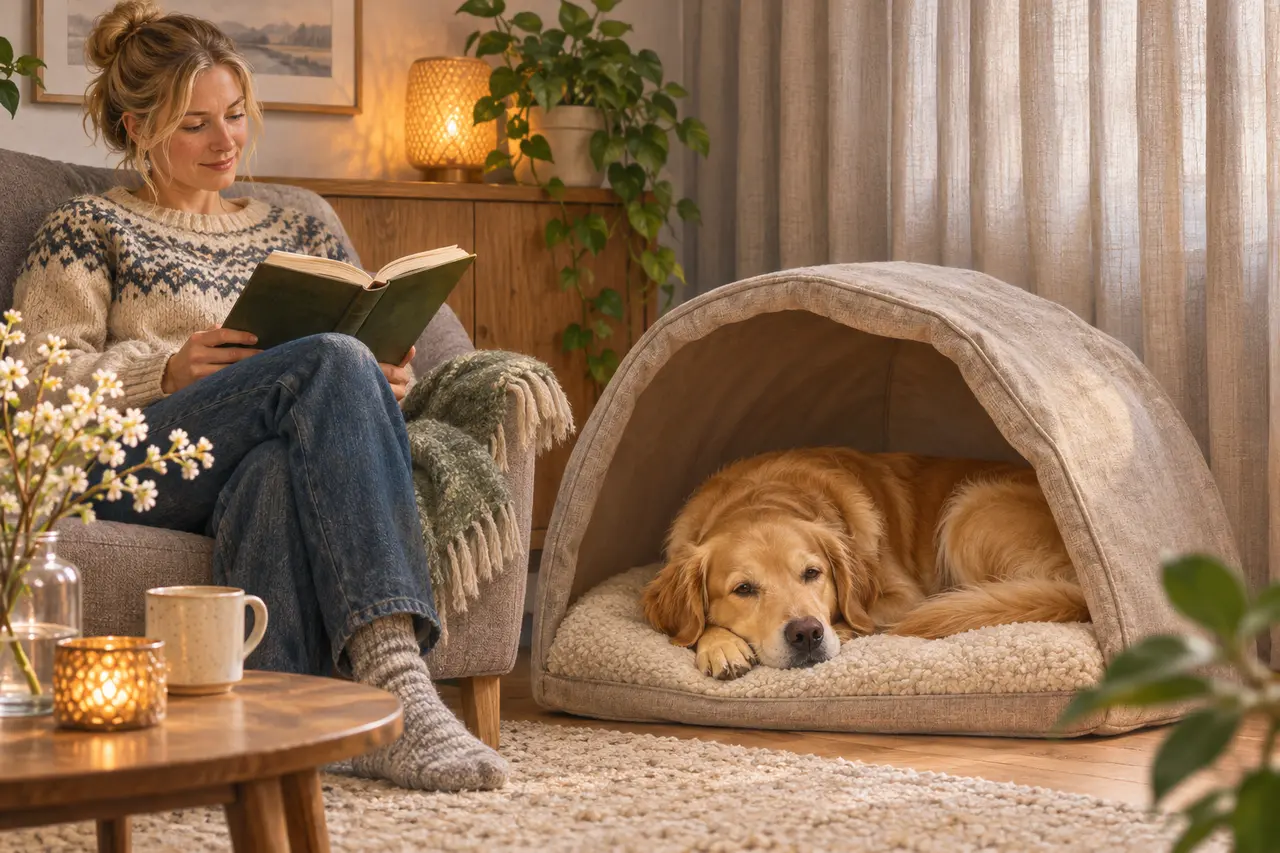
Provide a corner with the dog's normal bedding or an open den it can choose voluntarily. Prepare it beforehand, rather than suddenly shutting the dog into an unfamiliar space. Check doors, windows and escape routes. Update contact information linked to the microchip and make sure identification details are readable.
Close curtains on noisy evenings. Familiar moderate television or radio sound may soften outside noise, but should not become another loud source. Do not pull a dog from a safe hiding place to demonstrate that there is “nothing to fear”.
Walk before the noise
Schedule the main walk for a quieter period, preferably before fireworks begin. Use familiar secure equipment and a lead where unexpected bangs are possible. Do not take the dog to a display, leave it tied outside a shop or assume that waiting alone in a car is a suitable alternative.
Agree on household responsibilities
- Who walks the dog and checks the doors?
- Where are the lead, water and familiar items?
- Who stays nearby during the noisy period?
- How will you contact the vet if needed?
Offer calm contact if the dog seeks it. If it prefers to hide, avoid forcing interaction or punishing fear. Afterwards, record what happened and how the dog recovered. That information supports future planning; it is not a reason to repeat a loud test the following evening.
Sources
Prepared 6 November 2026. The image is an AI-generated illustration.