
Baked pears with oat crumble: a warm dessert for four
Bake pear halves with a cinnamon oat topping. Ingredient quantities, a clear method and doneness checks for firmer or softer fruit.
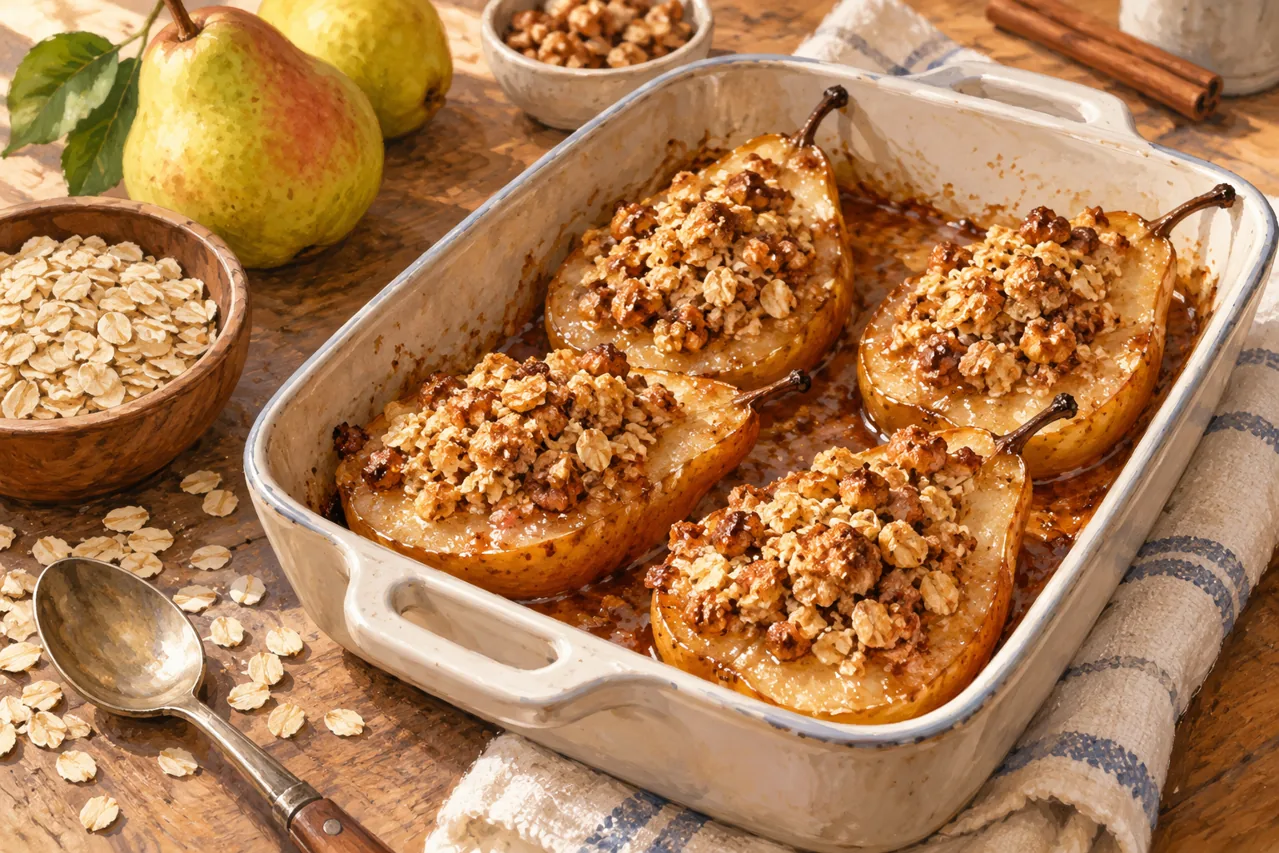
Baked pears require no pastry rolling and no attempt to lift a whole cake from its tin. Each half carries its own oat topping and becomes an individual serving. This home recipe makes four modest portions for the end of a November dinner. Treat the baking time as a guide: variety and ripeness influence the result more than an exact minute on the timer.
Ingredients for four
- 2 large pears
- 50 g ordinary rolled oats
- 25 g plain wheat flour
- 30 g cold butter
- 20 g brown or white sugar
- half a teaspoon of ground cinnamon
- a small pinch of salt
- 2 tablespoons of water for the baking dish
Choose fruit that keeps its shape when cut. A very soft pear is better suited to another preparation than a filled baked half. Use a shallow dish that holds all four halves in a single layer. In an oversized dish the liquid spreads very thinly, while a crowded one makes adding the topping awkward.
Make the crumble first
Heat the oven to 180°C using conventional top and bottom heat. Mix the oats, flour, sugar, cinnamon and salt. Add the butter in small cubes and rub it into the dry ingredients to form uneven crumbs. A few larger pieces are welcome; there is no need to work the mixture into a smooth ball of dough.
For a less sweet dessert, reduce the added sugar rather than increasing the cinnamon. This lets the fruit’s flavour remain noticeable. The recipe contains wheat and dairy. Select ingredients separately for particular dietary needs; using oats does not automatically make a dessert gluten-free.
Fill and bake the pears
Wash the fruit, cut it lengthways and scoop out the seeds and firm core with a spoon. Place the halves cut-side up. If one tips over, remove a very thin slice from its underside without cutting through the flesh. Divide the crumble between the four halves and pour the water into the bottom of the dish.
Allow roughly 25–35 minutes, checking earlier for softer fruit. Carefully insert the tip of a knife into the thickest part. The flesh should yield readily while the half still holds its shape, and the topping should look golden. If the crumble browns before the pear softens, cover the dish loosely with foil and continue baking, checking at short intervals.
Serve, then record what worked
Let the dessert cool a little because the juice collected in the hollow is hot. Offer plain yoghurt separately if desired, so each person can add their preferred amount. Move the halves with a broad spoon or spatula supporting the fruit underneath.
Note the pear variety, starting ripeness and actual baking time. Those observations make the recipe more repeatable in your own oven. These quantities form an editorial home recipe; they are not presented as the results of a separate kitchen test or a measured nutritional analysis.
Prepared 1 November 2026. The image is an AI-generated illustration.