
Blood sausage in the oven: temperature, sides and timing
Follow the packaging for purchased verivorst and coordinate it with potatoes and cabbage. One oven setting does not automatically suit every product.
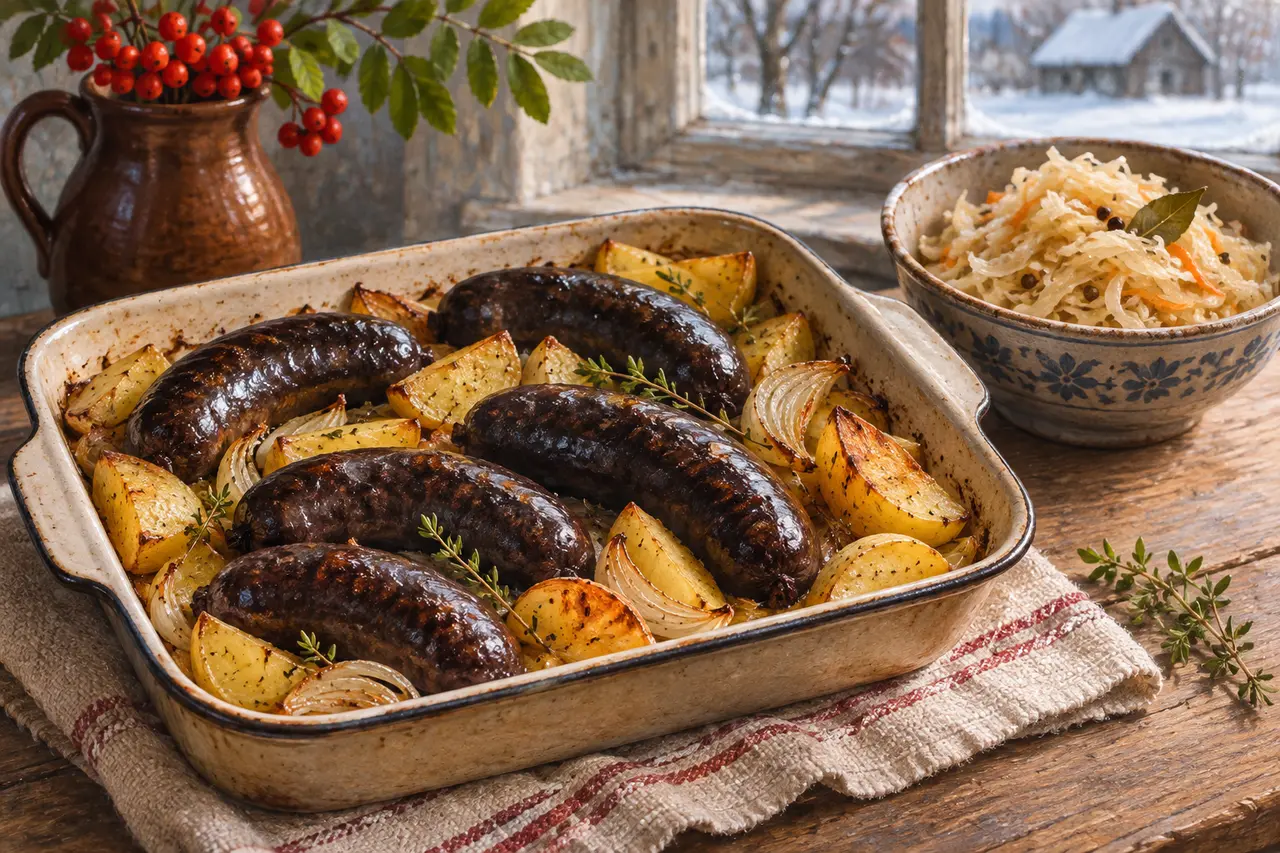
Blood sausage is convenient to cook in the oven, but similar packaging and a familiar name do not establish an identical method. Start with the instructions on the product you bought. Ingredients, thickness, casing and prior processing differ. This is a dinner-planning approach rather than a universal cooking regime. The editorial team has not kitchen-tested this version.
Assemble the meal
For four servings, you might plan approximately 600–800 g of purchased blood sausage, 800 g of potatoes and 400 g of ready-stewed cabbage. These are suggested meal quantities, not a portion-size standard. Add lingonberry sauce if desired. Check ingredients and allergens on each package, because sausage and side-dish recipes vary.
Arrange a separate alternative beforehand for anyone who avoids meat or a particular ingredient. Removing a casing or making a small change on the plate may not address the requirement.
Choose the temperature from the label
The manufacturer's directions take priority. Rimi describes starting at 180 °C and later raising the heat to 200 °C for browning. That is a general technique, not a replacement for your product's cooking time, temperature or completion requirements.
Do not transfer the timing of a thin sausage directly to a thicker one, or judge completion solely by a dark surface. Look up an unreadable label using the exact product name. For a product requiring full cooking, meet all heat-treatment requirements rather than focusing only on appearance.
Divide the work into stages
Prepare potatoes and cabbage according to their chosen methods first. Raw potatoes and a ready-cooked side need different times. Do not place everything on one tray simply to reduce washing-up. Coordinate the sides with the sausage instructions and clear a safe place for the hot dish.
Arrange the sausages and use cookware as the packaging directs. Oiling, piercing the casing and adding liquid are not universal steps. Ask the producer if the instructions are unclear. Flambéing for a dramatic family-table effect is unnecessary.
Before serving
- Confirm that the product's completion requirements are met.
- Check and finish the sides separately.
- Use clean dishes for cooked food.
- Put the hot dish on a stable heatproof surface.
If the result works well, record the product name and actual settings. Next time you can compare specific information rather than remembering that “half an hour was enough”. The article image illustrates serving; it does not document a kitchen test of this version.
Sources
Prepared 6 November 2026. The image is an AI-generated illustration.