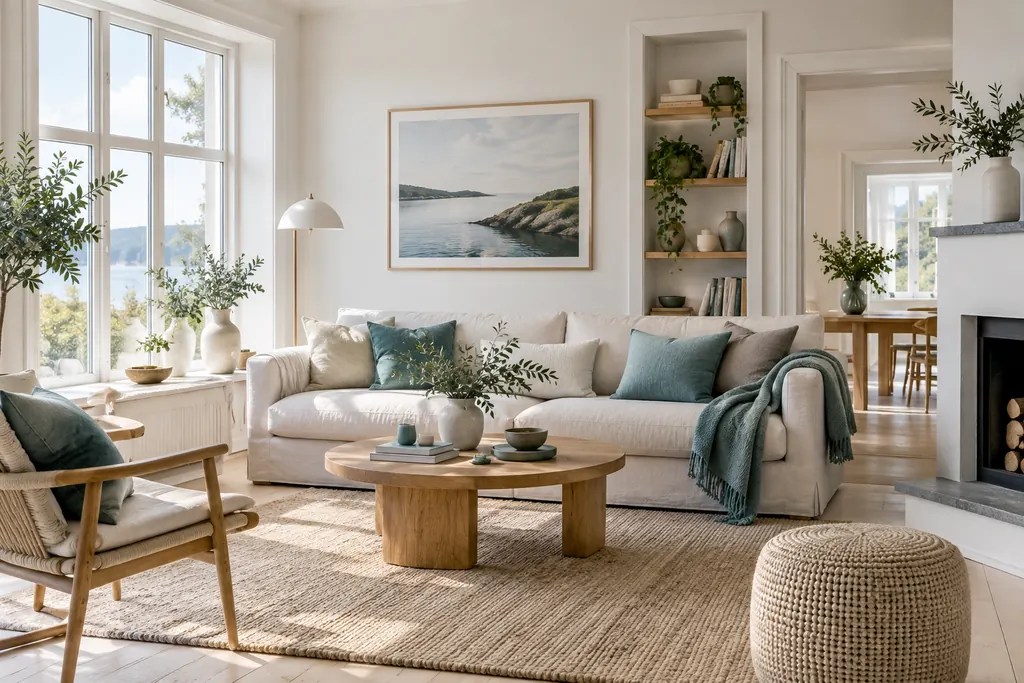
How to create a comfortable living room
A welcoming living room starts with the way you use it. Colours and decorative objects come afterwards.
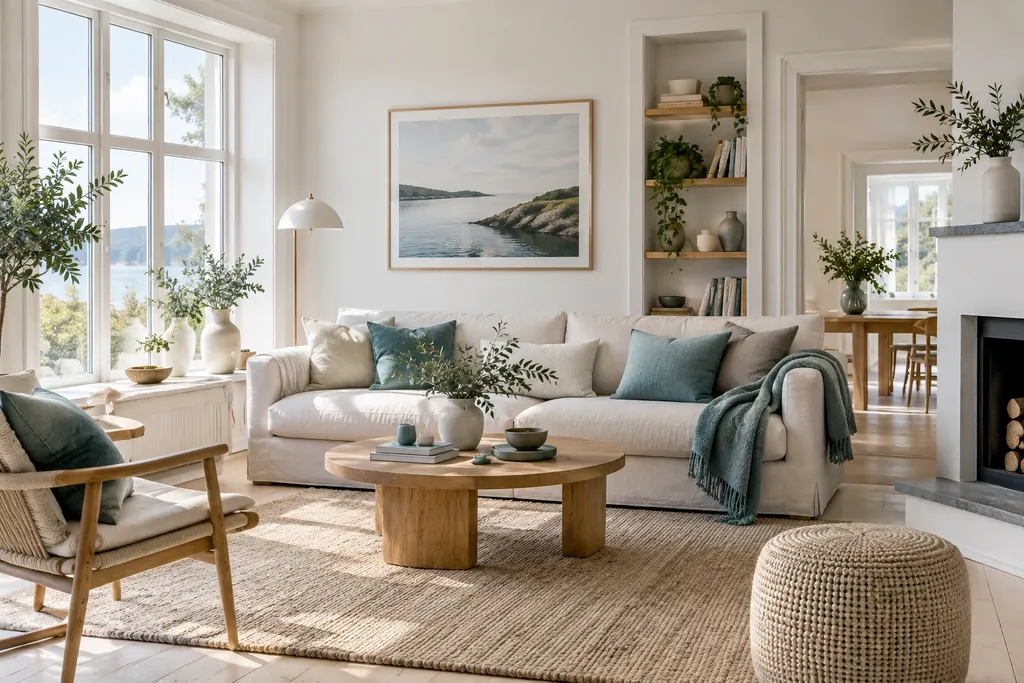
Start with an ordinary evening
A comfortable living room begins with understanding what happens there. List the activities that share the space on a normal weekday: someone watches a film, another person reads, a child builds something on the floor, and occasionally an adult answers work messages. Describe a weekend with visitors separately. These situations need different arrangements, and a layout that works for one may interrupt the other. Give everyday activities permanent space and use movable furniture for occasional needs.
Turn the list into a short brief. For example: two people should be able to talk comfortably, one person should be able to read while the television is on, and the route to the balcony must stay clear. This is a hypothetical household brief, not a universal formula. It provides a useful way to judge furniture. A beautiful item that supports none of the room’s activities can wait until the essential arrangement works.
Measure how furniture works, not only where it stands
Measure walls, door openings, windowsills, radiators, sockets and projecting corners. Mark the direction in which doors open. Add the space needed for an open cupboard, a pulled-out drawer and a chair with somebody sitting on it. A piece of furniture occupies more space during use than its closed outline suggests.
Check the delivery route for large items. The entrance, lift, stair corners and apartment door can matter as much as the final room dimensions. Packaging sizes may differ from the dimensions of an assembled sofa. Ask for the relevant measurements before placing an order, especially when the item cannot be taken apart easily.
A paper plan and simple furniture rectangles are enough for an initial layout. To test the arrangement more directly, mark outlines on the floor with tape that is suitable for the surface. Walk through carrying a bag, open the balcony door and pull a chair backwards. Practical movements reveal restrictions that are easy to overlook in an attractive room photograph.
Decide what the seating should support
For conversation, arrange seats so people can see each other without continually turning their heads. For film watching, check the screen from every regularly used seat. Viewing distance depends on screen size, resolution and personal comfort, so a single distance without that context is not a useful instruction. Try the proposed position before committing to the rest of the layout.
A sofa against a wall can free the centre of a small room. In a larger room, moving it forwards may create a more coherent seating area. The space behind it should then have a purpose: circulation, access to a window or room for a narrow console. A gap that is too awkward to use simply becomes another place to clean.
When choosing seating, compare seat depth, back support and how easily your feet reach the floor. Sit as you normally would at home. A quick shop visit cannot reproduce an entire evening, but it can reveal an unsuitable shape. Also consider whether cushions slide, whether the cover can be maintained as needed and whether the furniture works for the people who will use it most often.
Protect the routes through the room
Draw routes from the entrance to adjoining rooms, storage, windows and the balcony. People should be able to use the main routes without moving a coffee table every time. Test them with the room in everyday condition, including a chair pulled out and the belongings that normally appear during the evening. An empty room can give a misleading impression of available space.
If the coffee table interrupts movement, consider a narrower shape or smaller tables that can move independently. However, each movable piece needs somewhere to go. Several small objects are not automatically easier to live with than one larger object. Check whether they can actually be moved without blocking another activity.
Plan cable routes together with furniture. Cables should not cross walking routes or become trapped in a doorway. Changes to fixed electrical wiring require an appropriately qualified professional. Check rugs as practical objects too: edges that curl and unsuitable backing can cause problems regardless of the pattern. Follow the product’s care and installation guidance.
Build a palette around what will remain
Start with surfaces that are staying: flooring, doors, a large cupboard and sofa upholstery. They already influence how the room’s colours relate to each other. Photograph the room in daylight and identify the shades that occupy the most space. Then choose a quiet base and a few accents to repeat. This is a design approach to test, not a compulsory ratio that every room must follow.
Compare paint and fabric samples beside the existing floor and furniture during the day and after dark. A small sample under shop lighting does not show how a colour will look across an entire wall. Use a larger sample or a removable test panel where practical. Avoid making the final decision from a phone screen alone because display settings affect the appearance.
Repeated colour can connect otherwise different objects. A wood tone might appear in a table and a frame, while a chair colour appears in a small detail on a cushion. A matching furniture collection is not essential. The arrangement can feel coherent when different materials share a clear palette and suit the way the room is used.
Give lighting separate jobs
Look at the room after sunset. General lighting helps people move around; task lighting supports reading or another activity; softer supplementary light can create a calmer evening setting. One bright ceiling fitting may illuminate the room while leaving a book in shadow or reflecting in the television.
Test a portable lamp beside a chair while somebody is seated there. The light source should not shine directly into their eyes. Check reflections on nearby screens and notice whether the reader’s body creates a shadow over the page. Moving a lamp can be more useful than simply choosing a more powerful bulb.
When replacing a light source, compare its light output, colour temperature, fitting and dimmer compatibility. Keep a note of a combination that works. A future replacement is then less likely to change the room unexpectedly. Observe the fitting’s electrical limits and the manufacturer’s instructions. Decorative preferences do not override those requirements, and unfamiliar wiring should not become a trial-and-error project.
Store everyday items near where they are used
Remote controls, charging leads, games, blankets and children’s supplies often remain scattered because they have no convenient home. List the actual items before choosing another storage unit. Separate what is needed daily, what is used weekly and what could be stored elsewhere.
Open shelves work well for frequently used books and selected objects. Closed storage can contain small accessories and visually busy packaging. A basket is useful only if its contents are accessible. If finding one thing means emptying it every evening, divide the contents into clearer groups or choose a different container.
Keep somewhere to place a cup or book beside regular seating. A decorative arrangement should not occupy every useful surface. Consider cleaning when selecting furniture: access underneath, removable covers and the care requirements of tabletops all matter. The appropriate solution depends on the household, including children, visitors and animals, rather than on whether the piece photographs well.
Add personal objects in manageable groups
Choose things you enjoy seeing: a family photograph, a drawing, an object from a trip or books that matter to you. Position larger elements first, then add smaller details. View the arrangement from the sofa or doorway instead of judging it only from directly in front of a shelf.
If a surface feels overcrowded, put some objects away temporarily. A collection can rotate without being displayed in full at all times. Leaving space makes the selected objects easier to notice and makes cleaning simpler. Empty space is not an objective on its own, however. The room still needs to feel personal and support daily use.
Choose plants for their light and care requirements instead of filling an inconvenient dark corner. In a home with animals, check the safety of the particular species before bringing it inside. Secure heavy frames, shelving and tall furniture with fittings appropriate to the product and wall. Follow installation instructions rather than assuming that any fixing will do.
Live with the arrangement before completing it
After a promising rearrangement, resist ordering every remaining item immediately. Use the room for an ordinary week. Watch a film, have someone visit, clean the floor, charge a phone and spend an evening without the main ceiling light. Record specific problems. There is nowhere to put a cup is a more useful observation than something feels missing. For awkward routes, revisit the small apartment layout guide; for evening use, follow the living room lighting checks.
Sort the notes into changes that need only rearranging, changes needing a small item and changes involving larger furniture. Start with rearranging. Moving a lamp or freeing one shelf may remove the need for another purchase.
A finished living room does not need to resemble a catalogue photograph. Judge it through practical signs: the routes remain clear, lighting supports activities, useful belongings are within reach and an ordinary evening does not require rebuilding the layout. Those observations show whether the room works for the people who live there.