Living room lighting: combine three useful layers
Plan lighting around three jobs: moving through the room, doing a task and relaxing in the evening.
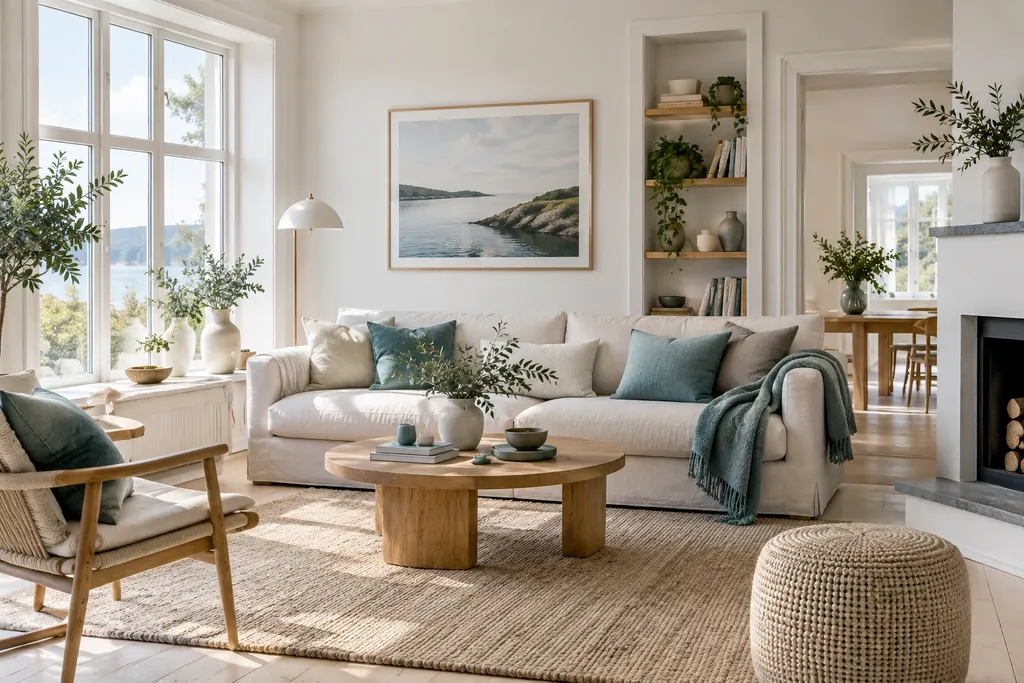
Living room lighting is easier to plan when you separate three jobs: seeing your way around, lighting a particular activity and creating a comfortable background. A single bright ceiling fixture can perform the first job while leaving a book in shadow or reflecting in the television. Adding more fixtures without a plan may simply create more switches and cables.
Begin with the places where you sit and the activities that happen there. You can test much of the arrangement with existing portable lamps before deciding whether any permanent electrical work is needed. This guide focuses on choosing and positioning light; changes to fixed wiring belong with a qualified electrician.
Observe the room during use
Look at the living room in daylight, at dusk and after dark. Note where daylight reaches, where curtains block it and which corners remain dim. Then sit in each regularly used position. A fixture that looks attractive from the doorway may expose a bright bulb directly to someone sitting on a low sofa.
Write down concrete problems rather than starting with a shopping list. For example, you cannot comfortably see a craft project, the dining table is unevenly lit, or the screen reflects a lamp behind the sofa. Each problem suggests a different adjustment. Increasing general brightness will not necessarily remove a reflection or illuminate a page shaded by your own body.
Include the people who use the room together. One may read while another watches a film. The arrangement needs to support both without forcing the entire room into one setting. If the furniture itself is still unsettled, decide its main positions first using the comfortable living room guide.
Give each light a clear role
General lighting helps you enter, move around and see the room as a whole. It might come from a ceiling fitting, several wall lights or another suitable arrangement. The useful question is whether the occupied space is comfortably visible, not whether one particular fixture type is mandatory.
Task lighting serves a defined activity such as reading, writing or making something. It should reach the working surface from a useful direction. An adjustable lamp can be helpful when different people use the same chair or when the activity moves between a book and a laptop.
Background lighting makes it possible to use the room at a gentler level when strong general light is unnecessary. A shaded table lamp or light reflected from a wall may suit this role. Decorative lighting can also highlight a shelf or object, but it should earn its place rather than becoming another bright point that competes for attention.
These roles do not require three new purchases. One existing fixture may already serve a role well. First identify the missing function, then test whether repositioning a lamp solves it.
Compare light output and appearance separately
Lumens describe light output; watts describe electrical power consumption. The FTC explanation of lighting labels makes this distinction clear. Compare output when choosing how much light you need, while checking the fixture’s permitted lamp specifications separately.
Colour temperature describes whether white light appears warmer or cooler. Lower Kelvin values look warmer and higher values cooler, as explained in the US Department of Energy lighting guide. This is a description of appearance, not a measurement of how bright the room will feel.
For a practical comparison, try potential bulbs in the same fitting and room. Look at the sofa fabric, wall colour and a book page. A product photograph on a phone cannot show exactly how the light will interact with your surfaces. If you are replacing several visible bulbs, check their stated appearance and output together so accidental differences do not distract from the room.
There is no single bulb count that solves every living room. Ceiling height, fixture shades, surfaces and the position of activities all affect the result. Start with the task you need to improve instead of applying an unexplained rule based only on floor area.
Position reading light from the seat
Place a reading lamp so light reaches the page without the source shining directly into the reader’s eyes. Test it while holding a book in a normal position. Moving the lamp a short distance or changing the shade angle may improve the result more than replacing the bulb with a stronger one.
For writing or craft work, watch where your hand casts a shadow. Adjust the light from the actual working position rather than assuming that left or right is always correct for every person and task. If several people share the spot, choose adjustments they can make easily without dragging a heavy base across the floor.
Check how stable the lamp is beside the chair and where its lead runs. Keep the cable away from a regular walking route and closing doors. A fixture should not require a precarious extension arrangement to reach its intended position. When suitable power is unavailable, revise the location or discuss a permanent solution with an electrician.
Test reflections before adding brightness
Sit in front of the television or computer with the screen dark enough to see reflections. Notice whether windows, bare bulbs or glossy surfaces appear in the display. Try moving the portable light or changing its direction. A lamp hidden from one seat may still reflect strongly from another.
During screen use, experiment with a modest background light that does not point at the display. Judge comfort from the normal viewing position. Avoid adding an exposed bright source directly beside the screen simply because the rest of the room feels dark.
If the living room also contains a work area, the small-room home office guide helps coordinate the desk, screen and surrounding furniture. Treat lighting as part of that arrangement. Moving the desk can sometimes solve a repeated reflection more effectively than adding another lamp.
Check dimming and controls before buying
If you want to adjust brightness, check both the light source and its control method. A lamp described as dimmable does not establish compatibility with every existing wall control. Look for the manufacturer’s compatibility information for the actual bulb, fitting and dimmer involved.
Smart lighting also has specific requirements. Some products use a dedicated remote or hub, while others support different control arrangements. The IKEA smart lighting support page illustrates why you should check the system components rather than assume that every smart bulb works in the same way. This is a compatibility example, not a recommendation to choose that brand.
Think about normal household use. Can a guest turn on useful light without an app? Can one person read without changing another person’s setting? Decide which lights should operate together and which should remain independent. A small number of understandable controls is often more convenient than many scenes whose names nobody remembers.
Plan installation and future maintenance
Before ordering, check the fitting dimensions, mounting requirements, bulb base and any restrictions in the manufacturer’s instructions. A beautiful pendant can obstruct a cupboard door or sit in the line of sight. A large floor-lamp base may conflict with the space needed to get out of a chair.
For fixed installations, give the electrician a furniture plan and explain the intended activities. Show where people enter the room, where they sit and which lights you want controlled separately. Resolve those decisions before finishes make changes difficult. Do not treat instructions for choosing a lamp as instructions for modifying electrical circuits.
Consider maintenance too. Can you reach the light source or clean the shade safely? Is the light source replaceable, and what does the manufacturer say about service? Keep the product reference and successful bulb specifications so replacing a failed component does not turn into guessing from an old photograph.
Build and review a few ordinary settings
Test a normal evening with general light for arriving home, task light for reading and a quieter combination for watching a film. These are starting situations, not a requirement for automated scenes. Try the switches in the order people naturally use them.
Make a short note of what remains wrong: glare from one chair, an unreachable switch or a dark section of the table. Change one factor at a time so you can judge its effect. The finished arrangement should let you do the things the living room is for, with light where it is useful and controls that the household can operate easily.