Viru Bog: prepare for a boardwalk outing
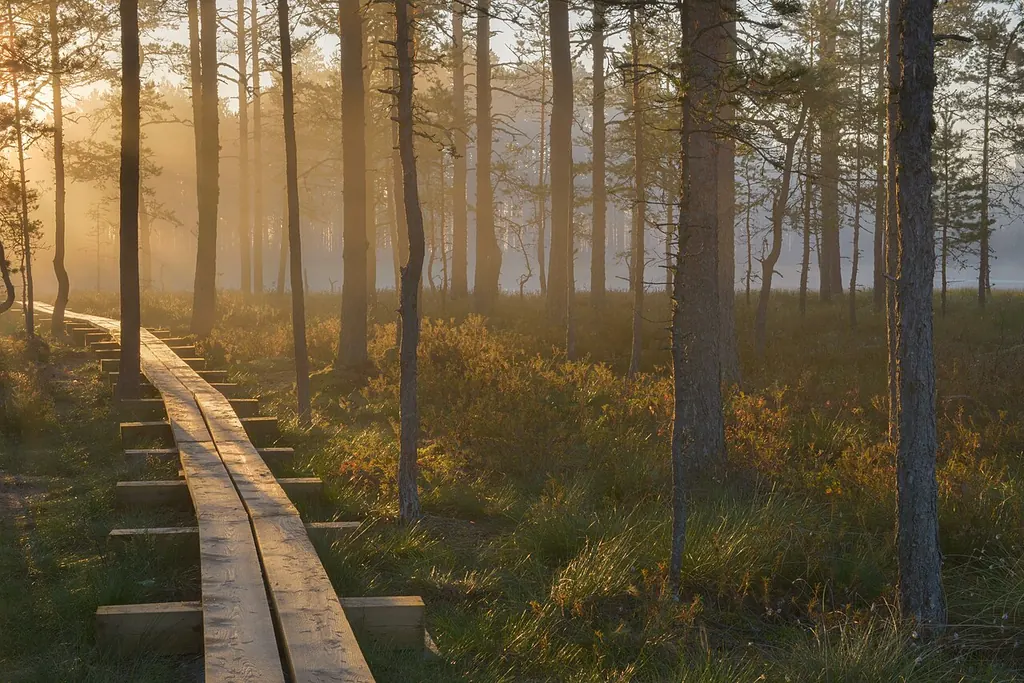
Viru Bog is known for its boardwalk and open bog landscape. Check current trail conditions and choose a manageable outing before travelling.
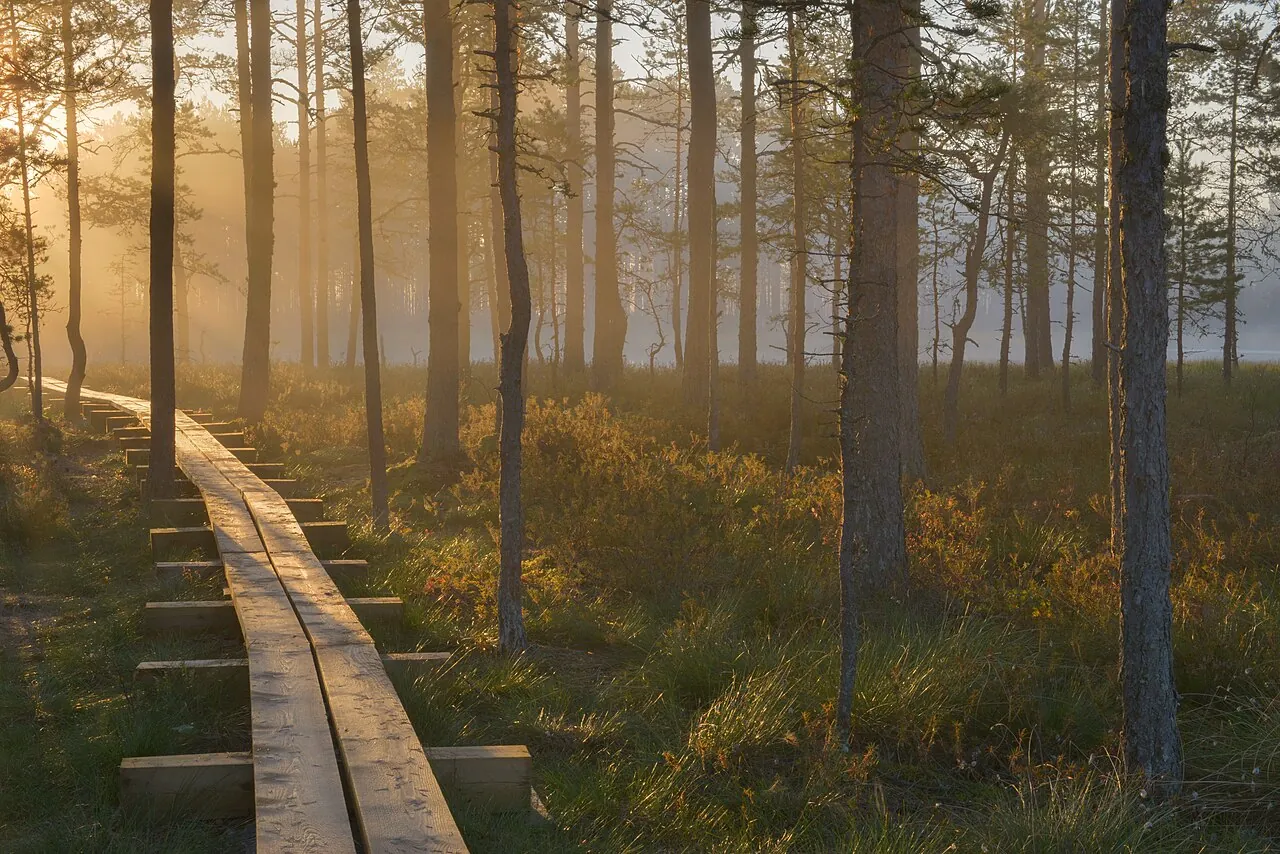
Viru Bog is easiest to enjoy when you decide which walk you are actually taking before stepping onto the boardwalk. The walk to the observation tower, the route through the bog and the complete circular route are different plans. They require different amounts of time, and they do not all have the same surface or accessibility.
Visit Estonia’s trail description lists a 3.5-kilometre route and a 5.5-kilometre circular option in Lahemaa National Park. It describes forest and bog scenery, information boards and an area of former peat-field restoration. Use the map and current on-site signs to understand how your chosen version connects back to your transport.
Decide what “a walk in Viru Bog” means for your group
An out-and-back visit towards the tower can be a sensible choice when you want a shorter experience and a clear return along the same route. A through-walk needs a plan for its far end. A circular walk means committing to the complete signed return, rather than assuming the boardwalk itself makes a loop.
Write down the start, intended turning point and finish. If these are three different places, check the connection between them. A route length displayed on a tourism page may describe the trail, not every step from a distant parking space or public-transport stop. Include those approach sections in your own time estimate.
Choose the plan for the person who needs the most time, not the person most excited about distance. Reading signs, stopping for photographs and letting other visitors pass are part of a real outing. A shorter walk with time to look around can be more satisfying than hurrying through the longest version.
Check the RMK notice before travelling
On 19 September 2026, RMK reported unfinished approach surfacing and temporary toilets during works. Recheck these dated conditions before travel.
Look for notices before relying on a route you remember from a previous visit. Maintenance, access and facilities may change independently of the main trail description. If a detail is essential to your trip, use the contact information on the official page to clarify it rather than assuming that no visible update means everything is suitable.
Save the trail map and relevant directions before leaving reliable connectivity. Keep the return route available as well as the route to the tower. A photograph of the information board on arrival can be useful, provided you take it while stopped and verify that the whole map is readable.
Understand the limits of the accessible section
RMK lists assisted wheelchair access for 1.3 kilometres to the tower’s first platform; the boardwalk narrows afterwards. Do not infer that the entire circular route suits your equipment from the description of one section.
Ask about the current approach surface, gradients and any work affecting the journey if those factors determine whether you can visit. Explain your equipment and the assistance available. A general accessibility symbol is a starting point for questions, not a substitute for matching the route to an individual’s needs.
For an out-and-back plan, remember that the return adds distance. Two legs of 1.3 kilometres make 2.6 kilometres before any additional approach you need to include. That arithmetic is a planning example based on the named section, not a promise that your complete car-to-car journey measures exactly 2.6 kilometres.
Allow time for the boardwalk’s shared space
Walk in a way that leaves room for other visitors. Before stopping for a photograph or to read a sign, check whether you are blocking a narrow section. Wait at a suitable wider place when another group needs to pass, and give companions time rather than trying to keep an unnaturally tight schedule.
Keep bags close enough that they do not swing into someone else. Put the phone away while negotiating a narrow or uneven part. If you are helping a child or another adult, prioritise stable movement over recording the moment. Photographs are easier when everyone has reached a comfortable stopping point.
RMK requires staying on the boardwalk and prohibits cycling there. Do not step onto the surrounding vegetation merely to pass someone or reach a preferred camera angle. Wait for a suitable opportunity. A crowded minute is not a reason to make a new path beside the intended route.
Use the observation tower considerately
RMK limits the upper floor to 25 people and forbids tower access during thunderstorms. Follow the current signs and any closure on arrival. A clear view from a tower is an optional part of the visit, not a reason to disregard the conditions for using it.
If the tower is busy, wait where you do not obstruct people coming down. Give others room to enjoy the view rather than treating the platform as a private photo location. Agree where your group meets if some people choose not to climb.
Children may need a simple explanation before the stairs: stay with the responsible adult, keep hands free enough to use supports appropriately and wait for space. If someone is uncomfortable with the height, the rest of the outing can continue without persuading them to climb. The bog can be observed from the permitted lower route too.
Observe more than the distant view
The information boards offer a way to make the walk more than a journey to the tower. Choose one sign to read carefully and look for the feature it explains from the designated route. Keep the distinction between a label you have read and a plant you can confidently identify; guessing is not the same as learning its name.
Try comparing three views: the approach through the trees, the open landscape and a detail beside the boardwalk. Notice how colour, texture and the feeling of space change. You can record those observations without touching plants, collecting material or leaving the trail for a closer look.
For a family group, ask each person to choose one question to discuss afterwards. It might concern the boardwalk, the information signs or how people manage visits to a sensitive landscape. A few thoughtful observations are more useful than trying to identify every species from a phone photograph during the walk.
Dress for pauses as well as movement
Check the forecast for the visit period and pack clothing you can adjust. Walking and standing still at a viewpoint feel different, so keep an extra layer accessible. Choose footwear that fits securely and suits the current surfaces. A familiar shoe with reliable grip is more practical than footwear chosen only for appearance.
Take drinking water, any food your timetable requires and a bag for all your rubbish. Do not rely on finding an open food service at the trail. Keep the amount manageable: a short outing does not need an oversized load, but essentials should not depend on an unconfirmed facility.
If the phone supplies your map and travel information, carry it charged and protect it from the conditions. The power-bank guide helps you choose a compatible backup. Save key information offline as well, because extra battery capacity does not create mobile coverage.
Set a turnaround time that you will actually use
Work backwards from your return transport and available daylight. Include approach time, the walk, pauses and a margin. Choose a point in the day when you will turn back or omit an optional section if progress is slower than expected. Make that decision before tiredness turns it into a group argument.
For example, a group may choose an out-and-back visit and agree to begin returning at a stated time even if it has not reached the hoped-for viewpoint. This is a planning method, not an official trail timetable. The point is to protect the return journey rather than treating the intended destination as compulsory.
Use the day-walk planning guide for a more detailed route and contact plan. If today’s conditions or group needs make Viru unsuitable, a shorter Pikakari seaside visit may be an alternative on another suitable day, with its own checks. Changing the destination is preferable to forcing a walk that no longer fits.
Leave the route as you found it
Take your own waste away and respect all current local restrictions. If bringing a dog, check the route’s rules beforehand; RMK’s visitor guidance calls for dogs to be kept on a lead in nature. Keep the animal under suitable control so other visitors can use the narrow route comfortably.
Before leaving, check that everyone has returned, note any problem you need to report through the official contact and make sure your transport plan still works. The most useful measure of a Viru Bog outing is not the number of kilometres recorded. It is whether the route matched the group, the landscape could be observed calmly and everyone had a clear way back.