Indoor activities for children on a rainy day
An indoor day can have variety without new toys. Alternate quieter and more active tasks while leaving children some choice.

A rainy day at home becomes easier when you have a few different activities rather than an obligation to entertain continuously. Choose one idea that can begin with what is already available, leave space for free play and keep the next option in reserve. You do not need to set up every activity in this article at once.
The ideas below are original play prompts to adapt to the children present. They are not age-based developmental tests. Use suitable materials, keep an adult available and simplify any task that becomes frustrating. A child may prefer observing, helping with one part or leaving a game after a short attempt; the plan can accommodate that.
Prepare one useful play area
Clear a small table or a safe part of the floor and gather a limited selection of paper, washable drawing materials and clean cardboard. Choose pieces and tools suitable for the youngest child who can reach them. Keep small parts, sharp cutters, plastic bags and unsuitable packaging out of the play materials.
Agree where wet or messy materials may be used and where finished work can stay temporarily. An old tray or a washable surface can make the boundary obvious. Do not turn preparation into a major rearrangement of the room. The purpose is to make starting and finishing simple, not to create a perfect activity corner.
Offer two choices and let the child help set up the selected one. Keep the unused supplies away until needed. A small visible choice is easier to act on than a table crowded with every possible material. If siblings choose differently, consider whether two quiet tasks can happen beside each other without constant adult switching.
Build a paper town with a purpose
Draw a few roads on large sheets and add simple paper buildings. Give the town one story: the library needs a delivery, a new café needs a sign or a bus route needs three stops. A purpose turns random construction into a game without requiring a complicated model or accurately scaled buildings.
One child can choose colours and place buildings, while another writes names or explains the route. Use large safe pieces if younger children are present. Keep boxes open and accessible; the game does not need enclosed spaces, fastening a child inside anything or climbing on furniture to reach an imaginary roof.
When the town is ready, ask how a character gets from one place to another. Let the child change the road if the story needs it. Avoid correcting every unrealistic feature. At the end, keep a small section or take a private photograph if desired, then separate reusable cardboard from pieces ready for disposal.
Open a household post office
Make a few large paper envelopes or folded messages and choose safe delivery points in the room. A note might contain a drawing, a greeting or a request to bring a book. Reading is optional: pictures and colours can identify the recipient. Adults can write a child’s dictated message without turning it into a writing lesson.
Add a simple delivery rule, such as visiting two named places in order. An older child can draw a route or design a stamp, while a younger one chooses which picture goes to whom. Keep personal mail and documents separate so the game does not accidentally use something needed later.
Take turns being sender, sorter and recipient. The enjoyable part may be opening and answering messages, not producing many envelopes. Close the post office after the planned deliveries, keeping favourite messages in a small folder. This gives the activity an ending without demanding that every piece of paper become a permanent keepsake.
Create a short shadow story
Use a suitable cool light source under adult control and a clear wall or sheet positioned safely. Keep cables out of the route and never use candles, lasers or a hot lamp as a toy. Test the setup yourself before inviting children to make shapes, and avoid shining the light into anyone’s eyes.
Start with hands or large simple paper shapes handled with appropriate help. Give the story three events: a character arrives, encounters a problem and finds a solution. The problem can be small, such as a bird looking for its tree. A complete tiny story is often easier to enjoy than an endless performance without a direction.
Let children choose whether to operate a character, make a sound or watch. Adults can supply the connecting words if needed. After one performance, change a single detail and try again if interest remains. Put the light and cables away when the theatre closes rather than leaving the setup as an unsupervised climbing or pulling attraction.
Make a floor route without a climbing challenge
Create an imaginary journey on a clear, non-slip floor. Use a few stable markers suitable for the space and participants, avoiding loose material that slides underfoot. The route can involve walking to a colour, stopping beside a chair and carrying a large soft toy to its home. It does not need jumping from furniture or balancing at height.
Add variety through instructions rather than speed: move slowly like a robot, pause when the adult says stop, or choose the next destination. Keep the route away from stairs, sharp edges and busy kitchen work. If space is limited, a seated version can use pointing and moving the toy instead of moving the child around the room.
Avoid elimination rules that leave one child waiting while another continues. Participants can invent a new destination together or each complete a different version. Stop before the clear space fills with unrelated objects. The activity is a short change of pace, not a requirement to turn the whole home into a sports course.
Try a listening and observation game
Choose familiar gentle sounds: turning a page, tapping a spoon lightly on a cup or rubbing two sheets of paper. An adult makes a sound and the children guess or describe it. Nobody needs a blindfold or to be startled. Keep the items visible if that makes the game more comfortable and enjoyable.
For a visual variation, arrange three or four large familiar objects, then change their position while the child looks away voluntarily. Ask what changed rather than announcing a test score. Simplify by moving one object; make it more complex only if the participants request it. Stop if guessing becomes frustrating.
Children can become the person setting the puzzle. This changes the task from finding an adult’s correct answer to designing a question for somebody else. Agree that the puzzle must be fair and use the same safe materials. Return household items to their usual place when finished so the game does not leave useful objects missing.
Turn a food activity into one manageable task
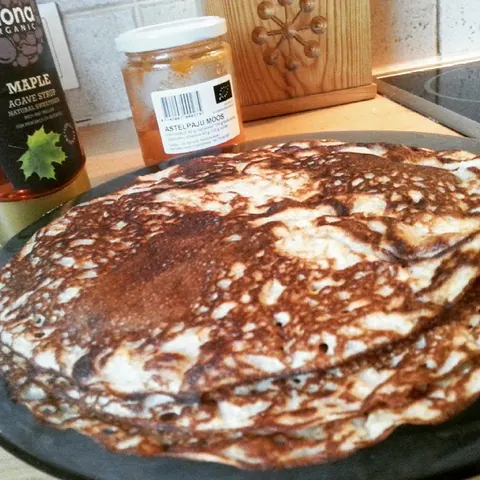
Choose a small part of preparing a familiar meal rather than a long recipe with many waiting stages. Children might arrange a table, measure an ingredient with help or suggest a topping. The thin-pancake guide provides a separate recipe if that suits the day; the adult remains responsible for the hot pan and other hazardous steps.
Set the task’s beginning and end. For example, the child’s job could be drawing the menu and placing napkins, not staying at the counter throughout the whole cooking process. Keep food requirements and allergies in mind when choosing ingredients. Do not make tasting an unfamiliar food a condition for joining the activity.
Build cleanup into the plan with a small achievable role, such as collecting paper menus or placing unbreakable items in the agreed spot. A food activity can be enjoyable without becoming a full pretend café. If you want the larger version, use the family weekend plans to give it a simple shared structure.
Make a book or screen activity participatory
Choose a short story and pause at one natural point to ask what might happen next. Children can draw an alternative ending or choose a sound for a character. There is no need to interrupt every page with questions. Let the story remain enjoyable, and accept an imaginative answer that differs from the published ending.
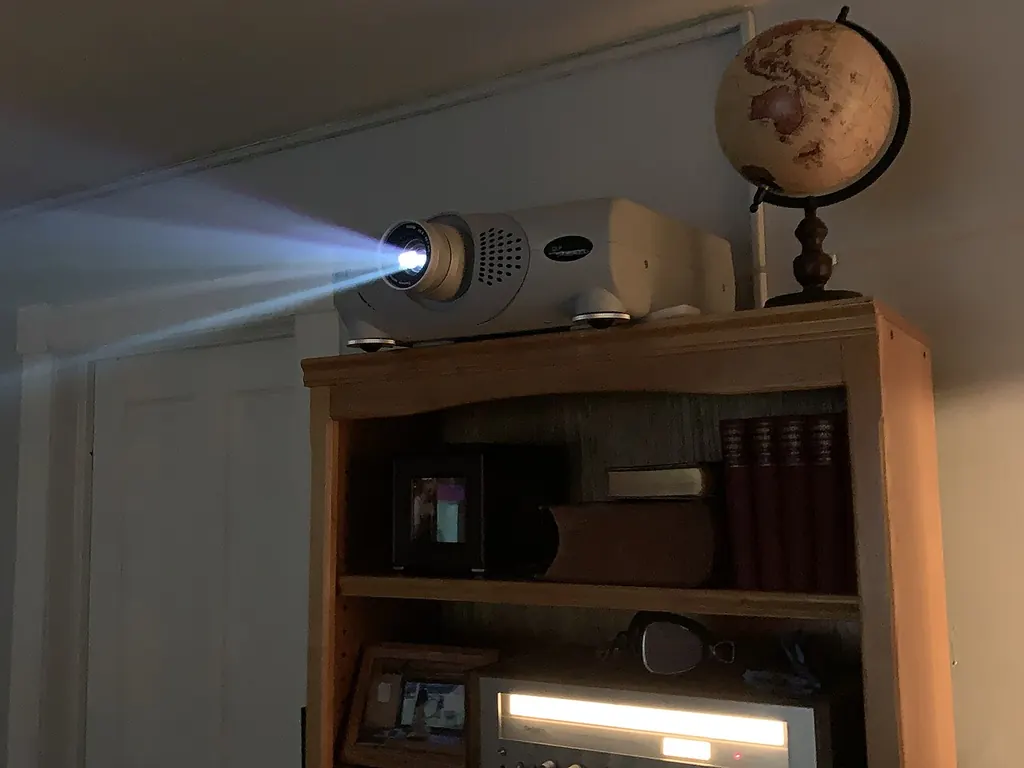
If the household chooses a film, prepare a comfortable viewing place and agree on the selection and stopping point. The home-projector guide covers equipment questions if you already plan to use one; an ordinary available screen is enough for the activity itself. New equipment is not part of the game requirement.
Afterwards, offer one optional response: draw a favourite scene, invent a title for a sequel or explain which character you would invite into the paper town. Keep it brief. The activity should not turn every story into compulsory schoolwork, and sometimes enjoying the book or film together is the complete experience.
Combine activities without filling every minute
For an illustrative morning, begin with a paper town, pause for a snack, make a short floor journey and finish with a story. Choose durations according to the group’s interest rather than setting an alarm for every transition. Keep one unused idea available, but do not introduce it simply because it appears next in a list.
Notice what makes stopping easier. Give a clear signal that the post office will deliver one final message or the theatre will perform one last scene. Offer a place for unfinished work to wait. An understandable ending can be more helpful than suddenly removing materials while the child is still building the central part of the game.
At the end of the day, keep only the supplies and ideas you actually want to use again. Ask which activity the children would choose next time and note any practical change needed. A rainy day does not have to produce many finished objects. A few shared moments, ordinary free play and a manageable room are enough.