Simple rhubarb cake in a round tin
This rhubarb cake pairs soft sponge with tart fruit. Cut the stalks into similar pieces so the topping cooks evenly.
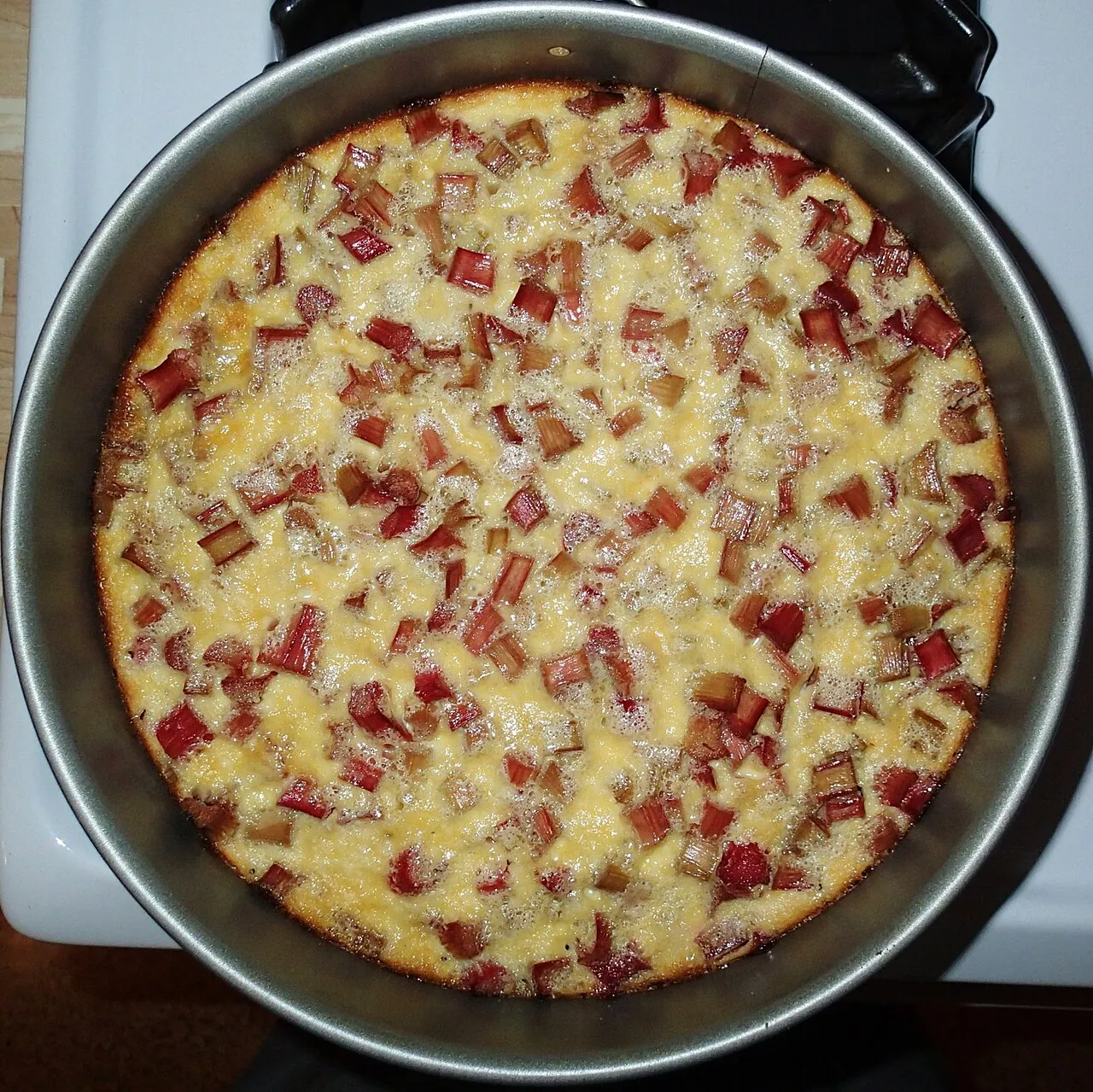
This rhubarb cake puts a tart fruit layer over a soft butter-based sponge. The practical priorities are simple: weigh the prepared rhubarb, distribute it evenly and check the cake’s centre before taking it out. Adding extra fruit because a few stalks remain on the board can change the result more than a small variation in decoration.
Use a round 24 cm tin and allow about 20 minutes for preparation, approximately 40–50 minutes for baking and additional cooling time. The baking range is a starting point; your oven, tin and fruit determine when the centre is cooked. The recipe makes one cake that can be cut into about eight to ten portions according to the occasion.
Ingredients and equipment
- 350 g prepared rhubarb stalks
- 150 g softened butter, plus a little for the tin
- 140 g sugar for the batter
- 3 medium eggs
- 200 g plain wheat flour
- 1½ teaspoons baking powder
- 80 ml milk
- A pinch of salt
- 1 tablespoon sugar for the top
You will also need baking paper, a 24 cm round tin, two mixing bowls, a spatula and a skewer for checking the sponge. A hand mixer is useful for the butter and sugar, but the flour can be folded in by hand. Place the oven shelf so the cake can bake near the centre without sitting close to an upper heating element.
Measure the topping sugar separately from the sugar used in the batter. This avoids adding all of it to the butter and discovering that the final spoonful is missing. Weigh the rhubarb after trimming, so the listed quantity describes what actually goes onto the cake.
Choose and prepare the stalks
University of Minnesota Extension identifies the stalks as the edible part and warns that the leaves are toxic. It also notes that colour does not determine a particular flavour. Green stalks are therefore not automatically a reason to abandon the recipe or double the sugar.
Wash and dry the stalks, remove damaged ends and cut them into pieces about one centimetre long. If a stalk is especially thick, split it lengthways before chopping so the pieces are reasonably similar. Remove particularly tough strings if needed, but do not turn preparation into removing a large amount of usable flesh without a reason.
For frozen rhubarb, thaw it in the refrigerator and drain the released liquid, then weigh 350 g of prepared pieces for this version. Do not pour the thawing liquid into the batter: the recipe already includes its measured milk. Frozen fruit can behave differently, so check the finished sponge rather than assuming the original timer proves it is done.
Get the tin and oven ready first
Heat a conventional oven to 180°C. This means a standard non-fan setting; if you use another mode, follow your oven’s guidance and observe the result. Do not switch modes halfway through simply because the top looks lighter than expected. The centre needs time to cook as well as the surface needing colour.
Line the base of the tin with baking paper and lightly grease the sides. Keep the lining flat enough that it does not fold into the batter. If the tin has a removable base, assemble it securely before filling and handle it by the sides rather than pushing upwards underneath it.
The butter should be soft enough to beat, not melted into a puddle. Take chilled ingredients out only for the preparation time needed and keep the process moving. A prepared tin and heated oven let you bake once the mixture is ready rather than leaving it on the counter while you begin those tasks.
Mix the batter and add the rhubarb
- Beat the softened butter with the 140 g sugar until the mixture becomes paler and more aerated. Scrape the bowl so dense butter is not left around the bottom edge.
- Add the eggs one at a time, mixing after each addition. Scrape the sides again. If the mixture looks slightly uneven, continue with the measured dry ingredients rather than adding unplanned extra flour.
- In the second bowl, combine the flour, baking powder and salt thoroughly. Add this mixture and the milk to the butter mixture in alternating portions, folding just until no dry flour remains.
- Spread the batter evenly in the prepared tin. Distribute the rhubarb over the surface, leaving it spread across the cake rather than piled in the centre. Sprinkle with the reserved tablespoon of sugar.
- Put the tin into the preheated oven and begin checking around the lower end of the 40–50 minute range. Continue baking as needed until the sponge in the centre is cooked.
Once the flour is added, prolonged beating is unnecessary. Fold through the bottom and sides so the mixture is even, then stop. Do not taste the raw batter; the FDA notes that flour is a raw food. Judge seasoning changes after the cake is baked, not by licking the mixing spoon.
How to tell whether the middle is ready
Insert a skewer into the sponge near the centre, choosing a place without a large rhubarb piece. You are looking for the absence of raw batter. Fruit juice can make a skewer damp, so inspect what is attached to it rather than treating any moisture as identical to an uncooked mixture.
If raw batter remains, return the cake to the oven and check again after a short interval. If the top is already well coloured, protect it loosely with foil while the centre continues cooking, keeping the foil away from heating elements. Do not increase the heat aggressively to finish the middle; that can make the contrast between dark edges and an underdone centre worse.
Let the cake stand in its tin on a heat-safe surface for about 15 minutes before carefully releasing it. Allow it to cool further before slicing. A hot slice is more fragile, so if neat portions matter for guests, give the cake enough time rather than trying to repair broken pieces with extra decoration.
Troubleshooting without changing everything
If the middle is wet, review three things first: whether the fruit was properly drained, whether its prepared weight was correct and whether the cake received enough baking time. Those checks are more useful than immediately blaming the oven or deciding that every rhubarb cake requires much more flour.
If the cake is dry, note the actual baking time and the tin you used. A wider tin spreads the batter more thinly, while a smaller tin makes it deeper. Keep the stated 24 cm size for a straightforward repeat. Changing the tin, fruit quantity and oven mode at once makes comparison difficult.
If the fruit is concentrated in one area, improve distribution next time rather than stirring the whole cake after it has been assembled. Place the pieces across the surface in a deliberate pattern with similar coverage at the edge and centre. The pattern need not be decorative to make the portions more consistent.
Variations that keep the basic cake recognisable
A little vanilla or finely grated citrus zest can change the aroma without replacing the main ingredients. Choose one addition on the first variation so you can judge it. Avoid adding a large wet topping before baking, since that creates another source of moisture on a cake already carrying fruit.
Do not automatically replace all the rhubarb with a heavier quantity of another fruit. For apples, use the separately balanced apple and cinnamon cake instead. For a chilled dessert with a different structure, see the baked cheesecake and allow its longer setting time.
Serve the rhubarb cake plain or offer yoghurt or another suitable accompaniment separately. If guests have ingredient restrictions, check the actual products used. This version contains wheat, eggs and dairy; changing only the topping does not change the ingredients in the sponge.
Store portions and make the next bake easier
Cool the cake promptly, cover and refrigerate the portions you will keep. The Food Standards Agency’s leftover guidance uses a 48-hour refrigerated window, or freezing for longer storage. Keep any perishable accompaniment separately chilled and follow its packaging instructions.
For freezing, wrap cooled portions in suitable packaging and label them so you can remove only what you need. Thaw in the refrigerator. Keep a brief recipe note with the rhubarb used, tin size, actual baking time and anything you changed. That record makes the next cake easier to adjust than a vague memory that it needed “a bit longer”.